Category: Hair
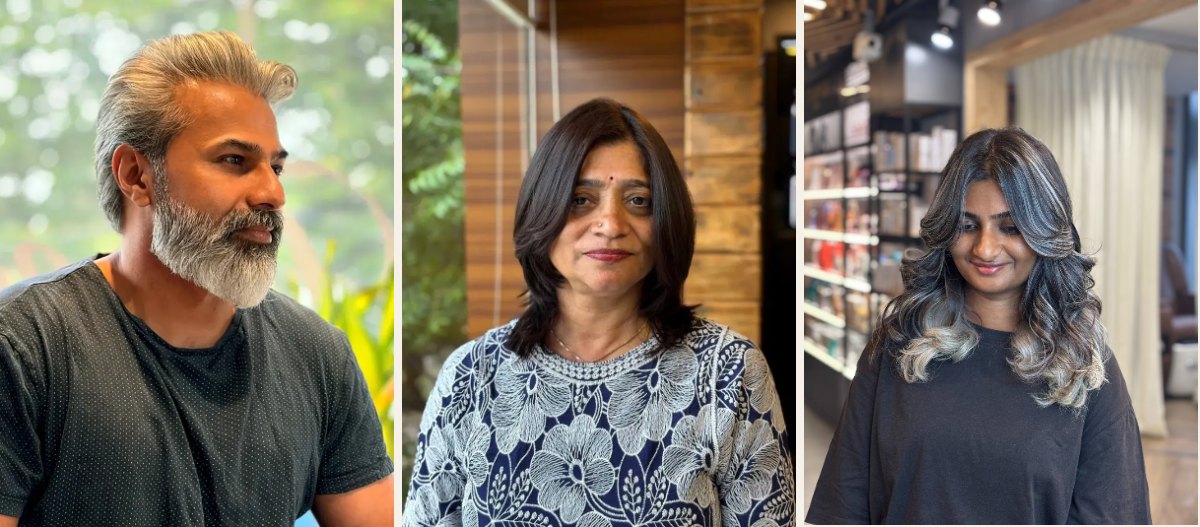
"I'm tired of colouring my roots every few weeks. Is there a way to stop hiding my greys without looking like I've given up?"
Grey hair blending uses highlights, lowlights or a sheer gloss to soften the contrast between your greys and your natural colour, so they look like part of a multi-tonal shade rather than a regrowth line. It suits people with scattered to moderate greys who want fewer touch-ups. For full, even coverage, a root touch-up or global colour still works better.
What Is Grey Hair Blending?
Covering greys means hiding them: the colour goes on from root to tip in one shade, and the greys disappear until they grow back. Grey blending works the other way. Instead of hiding the greys, your colourist works around them so they become part of the colour.
A colourist usually combines a few techniques, depending on your hair:
- Highlights or babylights: fine, lighter strands that sit close to the shade of your greys, so new grey growth blends in rather than standing out.
- Lowlights: darker strands woven back in, which add depth and stop the overall result from looking flat or washed out.
- Translucent gloss: a sheer colour that softens greys to a silvery or beige tone without fully covering them, and fades gradually.
The aim is not to make you look grey or to make you look younger. It is to make your greys look intentional and to make regrowth far less noticeable.
Grey Blending, Grey Coverage or Going Natural?
| Grey blending | Root touch-up or global colour | Going fully natural | |
|---|---|---|---|
| Look | Multi-tonal, soft, greys still visible | One even shade, greys hidden | Your natural mix of grey and pigment |
| Regrowth | Soft, gradual | A visible line as greys grow in | None |
| Upkeep | Every few months, depending on technique | Usually every four to six weeks | Haircuts and care only |
| Best for | Scattered to moderate greys, low-maintenance goals | Anyone who wants greys fully hidden | Anyone happy with their natural grey |
These are general guides. How fast your hair grows, how much grey you have and the contrast you choose all change the numbers.
Who Grey Blending Suits
Grey blending works best when:
- Your greys are scattered or moderate, roughly 10 to 50 percent of your hair. With fewer greys there is little to blend, and with more, coverage or embracing your natural grey may suit you better.
- You want fewer salon visits. A soft regrowth means you can usually go longer between appointments than with full coverage.
- You like a natural, dimensional look rather than one solid shade.
On dark Indian hair
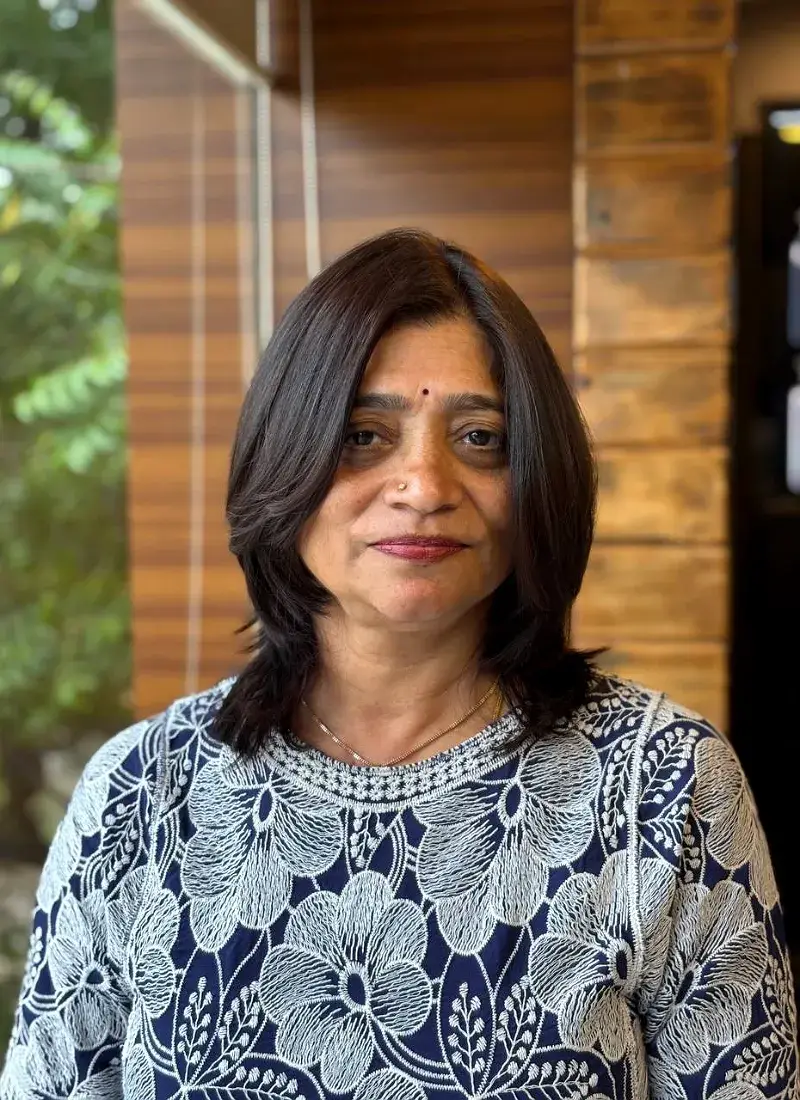
Most Indian hair is naturally dark brown to black, and white or silver greys stand out sharply against it. That contrast is what makes regrowth so visible after global colour. Blending reduces it by bringing some of your hair closer to the shade of your greys, often with soft caramel, beige or ash-brown tones. Lightening dark hair does reveal warm tones on the way, so a toner or gloss is often part of the plan. Our guide to balayage, highlights and global colour explains how lightening works on dark hair.
When coverage may be the better choice
- You want your greys completely hidden, for example for a specific event.
- You have a lot of grey and want to keep a single dark shade.
- Your hair has a long history of henna or box colour. Henna can affect how lightener and salon colour take, so tell your colourist about it at the start. Removal may be needed first.
Grey Blending for Men
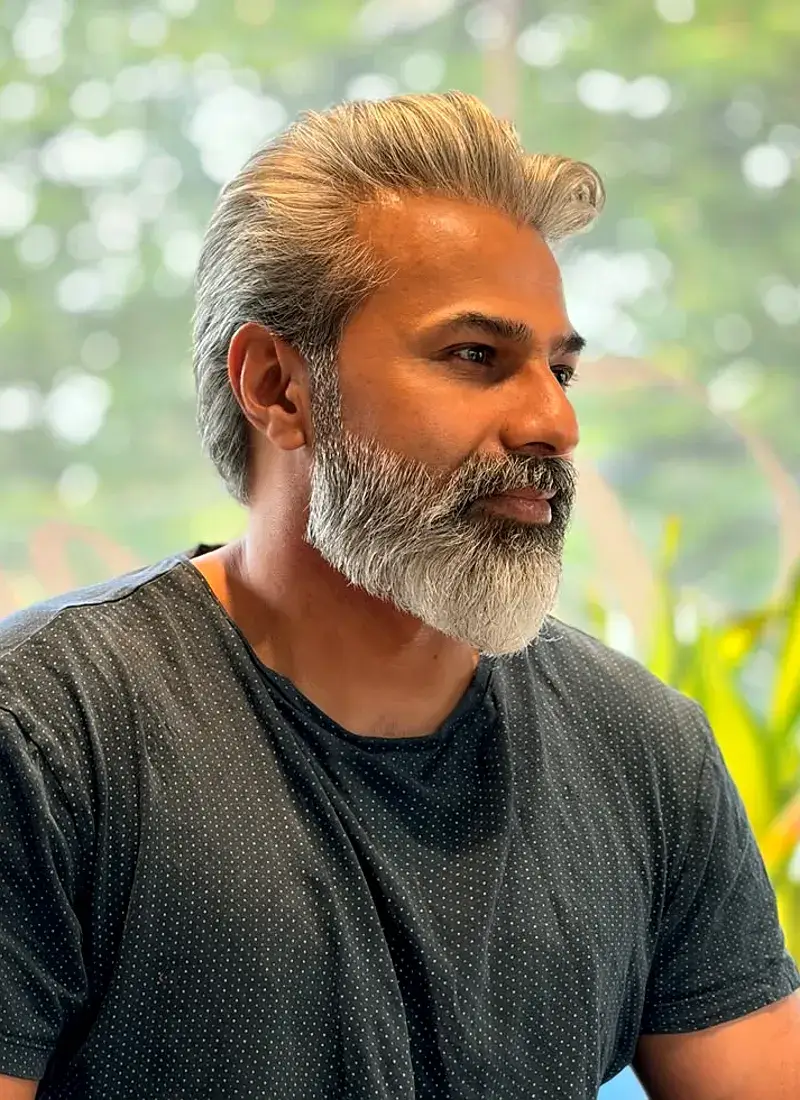
Many men notice greys first at the temples and in the beard. Blending can soften these so they look like natural salt and pepper rather than patches, without the flat, uniform look that can come with full coverage. Vurve Salon's menu also lists beard colour, moustache colour, and beard and moustache colouring, which your stylist can plan together with your hair so the shades match. Some men decide to keep their grey and simply groom it well. A good cut and beard shape make natural grey look deliberate too.
What Happens at the Appointment
- Consultation. Your colourist looks at how much grey you have, where it sits, your natural shade and your colour history, and talks through how much upkeep you want.
- Patch test. At Vurve Salon, we carry out a 48-hour patch test before hair colour to check for any skin reaction, so plan for it at least two days before your appointment.
- The colour. Depending on your plan, this may be highlights, lowlights, a gloss or a combination. Expect it to take longer than a root touch-up.
- Finishing. A toner or gloss often sets the final shade and softens any warmth.
If you are moving from years of global colour, blending may take more than one sitting, because colour does not lift colour easily. Your colourist will tell you what is realistic in the first visit.
How Often You Need to Come Back
Because regrowth is soft, many people come back every few months rather than every few weeks. A gloss or toner fades sooner than highlights, so you may book a quick refresh in between. Your colourist can suggest a schedule based on your hair growth and the look you want.
Caring for Blended and Grey Hair at Home
- Use colour-safe shampoo and conditioner, and wash a little less often if your scalp allows it.
- Watch for yellowing. Grey and lightened hair can pick up a yellow or brassy tinge. A toning shampoo, used as your colourist suggests, can help keep the tone clean.
- Protect from sun and heat. The American Academy of Dermatology notes that sun can make dyed hair weak, dry and faded. Use a heat protectant before styling.
- Condition regularly. Grey hair can feel coarser or drier. An in-salon treatment such as Kérastase Fusio Dose adds softness, and can be done as late as the day before an event.
Questions to Ask Your Colourist
- How much of my hair is grey, and is blending the right choice for that amount?
- What shades will you use, and how will they look as my greys grow in?
- How many sittings will it take if I currently use global colour or henna?
- How often should I come back, and what should I use at home?
- What will my hair look like in two months?
Explore Grey Blending at Vurve Salon
Whether you want to soften your greys, cover them or start embracing them, the best first step is a conversation with a colourist who can see your hair in person. At Vurve Salon, our colourists can help you choose an approach that suits your hair, your routine and how much upkeep you want.
Book a colour consultation or find your nearest Vurve Salon. You can also see our hair colouring services and men's grooming services.
Key Takeaways
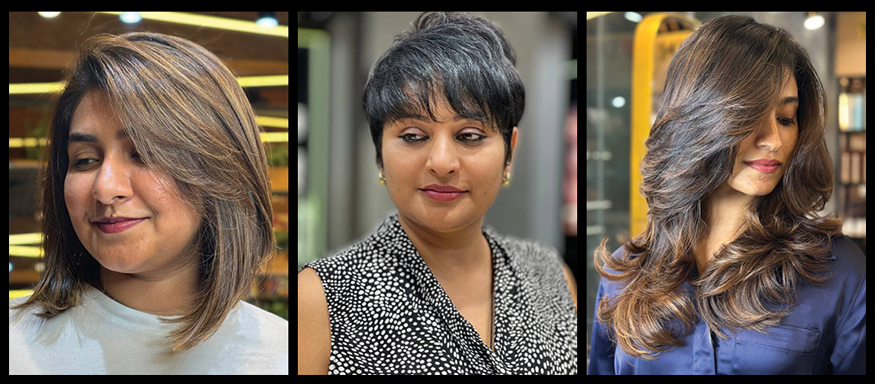
- The trending haircuts for women in 2026 include the pixie cut, frame cut bob, blunt bob, wolf cut, long layered lob, Birkin bangs, blunt curtain bangs, and butterfly feather cut.
- Face shape and hair texture decide how a cut looks on you, so match the style to both before booking.
- Wolf cuts and pixie cuts suit most hair textures, while Birkin bangs look best on naturally straight hair.
- Frame-cut bobs and long layered bobs fit busy mornings, since a quick blow-dry or flat iron is enough.
- A stylist consultation helps you pick a cut that fits your features and daily routine.
Many of us have made last-minute appointments for haircuts. A rough week, a breakup, a new job, or just a restless mood, and the mirror suddenly feels like the quickest place to start over. A fresh cut works like a reset button, which is why so many women walk into a salon with a vague idea and a saved photo. This year, the trending haircuts for women lean toward soft layers, easy movement, and shapes that look good even when slightly undone. Below are short and long options, who each one suits, and how to style them at home, so your next fresh start begins with a clear plan.
What Are the Best Haircuts for Women in 2026?
The best haircuts for women in 2026 are the pixie cut, frame cut bob, blunt bob with micro fringe, and wolf cut for short hair, plus the long layered lob, Birkin bangs, blunt curtain bangs, and butterfly feather cut for long hair. Each works with specific face shapes and textures.
Haircuts for Short Hair
Short haircuts for women in 2026 center on texture and shape. A pixie, a bob, or a wolf cut each gives short hair a distinct personality, and the right one sharpens your jawline and cheekbones.
Pixie Cut with a Twist
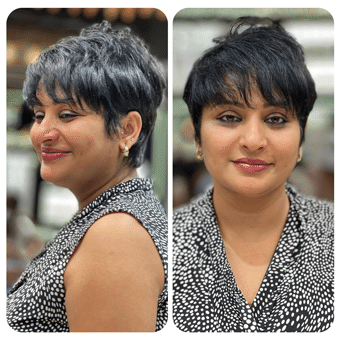
A pixie cut keeps the sides and back short with extra length on top. The twist comes from textured layers, bold color, and either an undercut or uneven lengths. Most face shapes suit it, including round, oval, square, and heart, and it works on straight, wavy, and curly hair alike. Small tweaks in the top section make the style feel personal.
Frame Cut Bob
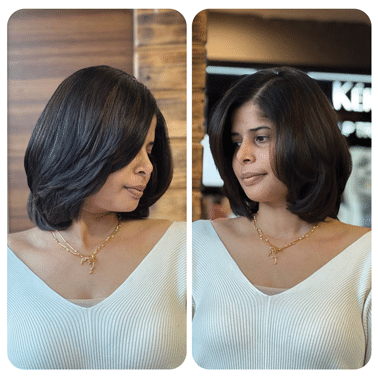
A frame-cut bob is a chin-to-shoulder-length bob with layers that frame the face. The hair sits shorter at the back and lengthens toward the front. It suits oval, heart, and square faces because it defines the jawline and lifts the cheekbones. Wavy, straight, and textured hair all take this cut well. A quick blow-dry or flat iron handles daily styling.
Blunt Bob with Micro Fringe
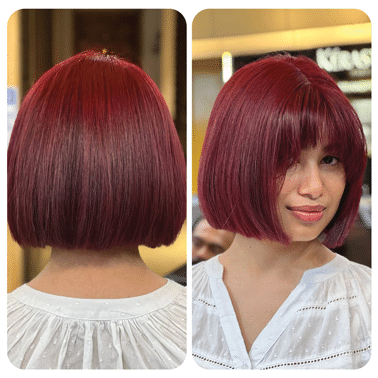
This cut is bold and graphic. The ends are cut straight across, usually at the chin or just above the shoulder, and a short fringe sits well above the eyebrows. Heart and oval faces carry it best, though it flatters other shapes too. Every hair texture can wear it, and a flat iron keeps the edges crisp.
Signature Wolf Cut
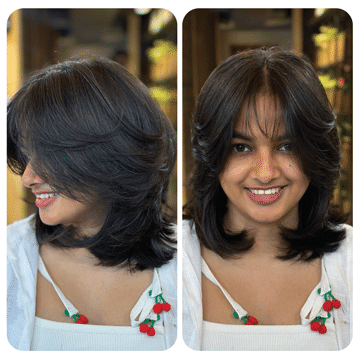
The wolf cut layers short, choppy pieces at the front into longer lengths at the back, which gives volume and a lived-in, windswept finish. It works on straight, curly, and wavy hair, and it looks especially good on oval and heart-shaped faces. Curtain or side-swept bangs add a softer frame, so try both with your stylist before choosing.
Haircuts for Long Hair
Long hair gains the most from layers and bangs. These cuts add shape and movement while keeping your length, which makes them a gentle way to try something new.
Long Layered Lob
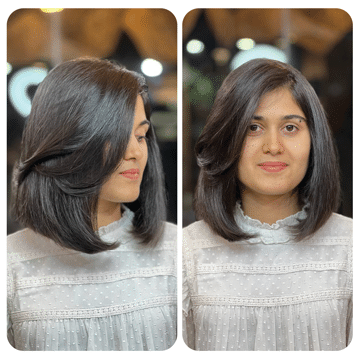
A long bob, or lob, falls just above the shoulders or at the collarbone. Layers add shape, and the cut flatters every face shape and hair texture. Use a flat iron for a sleek finish or a curling iron for beachy waves, and a texturizing spray defines the layers.
Birkin Bangs
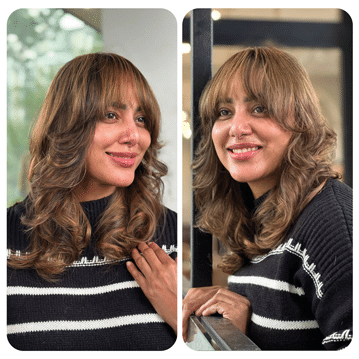
Birkin bangs take their name from the actress Jane Birkin. They are wispy and soft, graze the eyebrows, and grow longer toward the sides, so they blend into the rest of your hair and frame the face. They suit oval faces and naturally straight hair. A large roller and a blow dryer add the volume.
Blunt Curtain Bangs
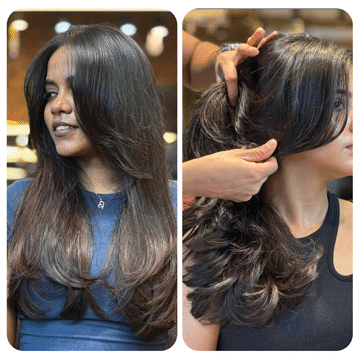
Blunt curtain bangs create a modern, striking look. They are straight across, slightly wispy, and parted in the middle or just off center, and they blend into the length. Straight to slightly wavy hair works best, and oval, round, and heart-shaped faces carry them well.
Butterfly Feather Cut
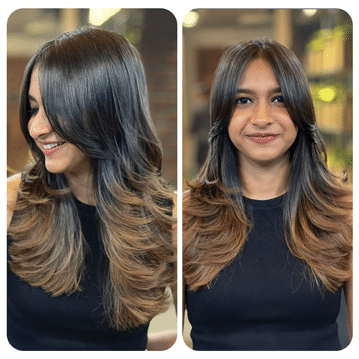
The butterfly feather cut is a soft, voluminous, layered style that starts around the face and flows downward. Oval faces suit it best, and curly or wavy hair gives it extra bounce. Mousse, a round brush, and a blow dryer create the lifted shape.
How Do You Choose the Right Haircut for Your Face Shape?
Start with your face shape, then factor in hair texture and how much daily styling you enjoy. Layers and bangs soften angles, and blunt lines add structure. A stylist can confirm the match in person.
Face shape |
Cuts that flatter |
Oval |
Frame cut bob, Birkin bangs, butterfly feather cut |
Round |
Long layered lob, blunt curtain bangs, pixie with height on top |
Square |
Frame cut bob, wolf cut with soft bangs |
Heart |
Blunt bob with micro fringe, wolf cut, frame-cut bob |
For hair texture, wavy and curly hair pair well with the wolf cut and butterfly feather cut. Straight hair shows off Birkin bangs and blunt curtain bangs.
Get Your 2026 Haircut at Vurve
Whether you want a classic bob or something dramatic, the best cut is the one that suits your features and your routine. At Vurve, our stylists handle coloring, cutting, and styling, and they help you find a haircut for your face shape and hair texture, with customized adjustments built around your needs. Book a consultation and walk out with a cut you love.
Frequently Asked Questions
1. Which haircut is best for a round face?
A long layered lob or blunt curtain bang suit a round face well. Both add vertical lines and soft framing around the cheeks. A pixie with extra height on top also lengthens the face visually.
2. What is the best low-maintenance haircut for women?
A frame-cut bob or a long layered lob fits busy mornings. A quick blow-dry or flat iron finishes either one, and the layers hold their shape between salon visits.
3. Are bangs in style in 2026?
Yes. Blunt curtain bangs and Birkin bangs both remain popular this year. They frame the face and blend into the surrounding layers, which makes them an easy way to refresh any cut.
4. What is a wolf cut?
A wolf cut layers short, choppy pieces at the front into longer lengths at the back. It gives volume and a windswept finish on straight, wavy, and curly hair. A light texture spray completes the look.
5. Which haircut makes thin hair look thicker?
Soft layers and blunt bobs create the look of fuller hair. Layers add lift at the crown, while a blunt bob keeps the ends dense and even. A lob with gentle layers is another good option.
6. What haircut suits curly hair?
The wolf cut and the butterfly feather cut suit curly hair best, since both celebrate natural bounce and texture. Layers remove weight, and a stylist can shape them around your curl pattern.
7. How often should you get a haircut to keep a trendy style?
Short cuts such as the pixie and blunt bob hold their shape best with a trim every six to eight weeks. Longer layered cuts can stretch a little further between visits. Your stylist can set a schedule around your hair growth.
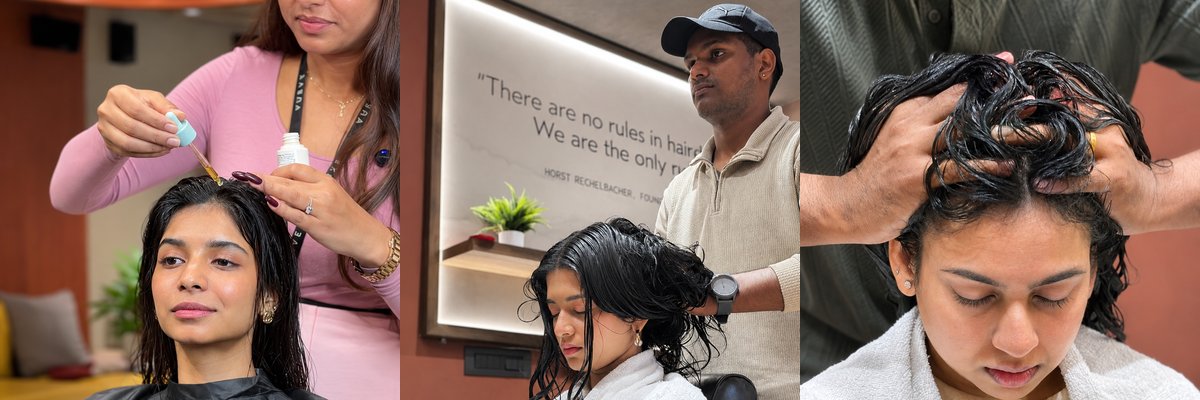
Vurve Salon Adyar in Chennai is South India's first Aveda salon, and the only Vurve salon that offers Aveda. Its Aveda hair rituals cover bond-building for coloured or breaking hair, scalp care, deep hydration, shine and curls. Prices start at ₹2,400, the same for women and men.
If you have been wondering what each ritual actually does, which one suits your hair, and how Aveda compares with the Kérastase rituals at our other salons, this guide walks you through it.
Why Aveda, and why Adyar
Vurve Salon Adyar opened in August 2025 as our Aveda salon. It is the only Vurve salon where you will find Aveda; our other salons in Chennai, Bengaluru, Hyderabad and Kochi offer Kérastase and 3TenX rituals instead.
We chose Aveda for Adyar because its formulas are plant-based and vegan, and the Aveda products we use are formaldehyde-free. For clients who care about what goes on their hair, and about where it comes from, that matters.
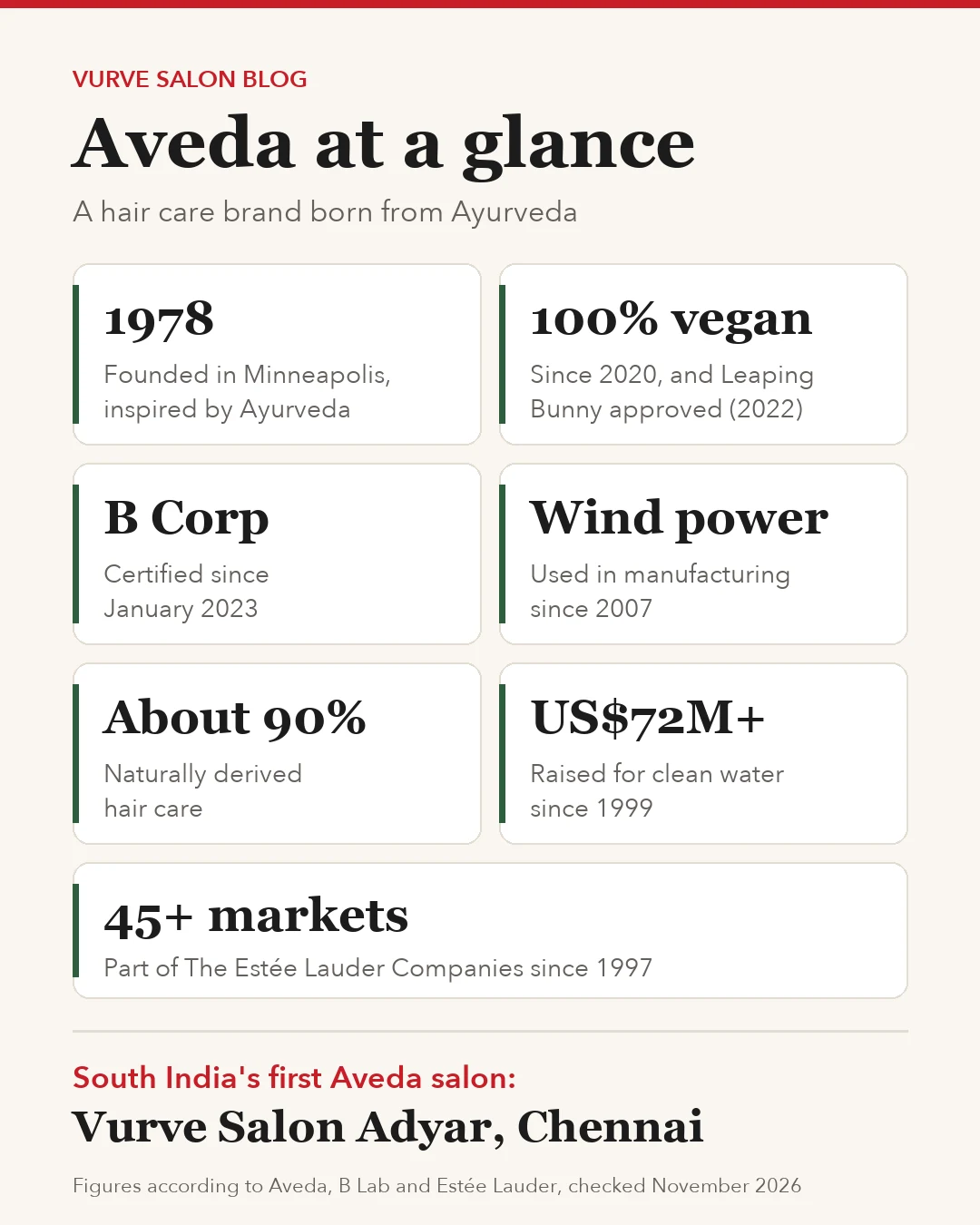
Aveda's story: a brand born from Ayurveda
Aveda has an unusual link with India. Its founder, the hairdresser Horst Rechelbacher, first learnt about Ayurveda on a trip to India in 1970. In 1978 he started Aveda in Minneapolis, in the United States, with a clove shampoo he made himself. Aveda says its name comes from Sanskrit and means "all knowledge".
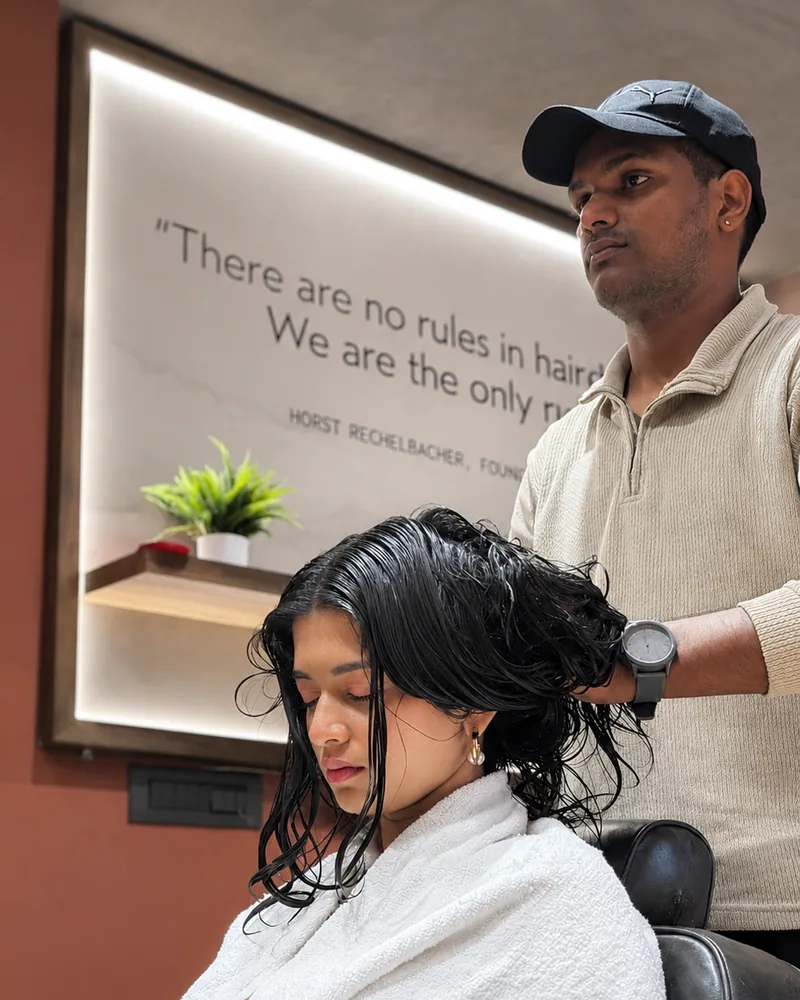
A quote from Aveda's founder, Horst Rechelbacher, on the wall at Vurve Salon Adyar.
Since 1997, Aveda has been part of The Estée Lauder Companies, and its products are now sold in more than 45 markets around the world. A few things set it apart:
- Vegan and cruelty-free. Aveda's formulas have been 100% vegan since 2020, and in 2022 the brand was approved under Cruelty Free International's Leaping Bunny programme.
- A certified B Corporation. Aveda has been a certified B Corp since January 2023. The certification looks at how a company treats its workers, community and environment, and must be renewed every three years.
- Made with renewable power. According to Aveda, its main manufacturing site in Minnesota has been powered by wind energy since 2007, through renewable energy credits, with solar panels added in 2020.
- Naturally derived. Aveda says its hair care collections are about 90% naturally derived.
- Clean water. Through its yearly Earth Month campaign, Aveda says it has raised over US$72 million for clean water projects since 1999.
The Aveda rituals at Adyar, and what each one does
Aveda groups its salon treatments by what your hair needs, and most come in two forms. At Adyar, a Refresh takes about 30 minutes and treats a concern in the hair itself, much like a Kérastase Fusio Dose. A Restorative takes about 1 hour 15 minutes and treats both hair and scalp, much like a full Kérastase ritual.
All prices below are from the Vurve Salon Adyar menu, include GST, are the same for women and men, and were checked in November 2026.
Bond-building and strengthening
For: dry and frizzy hair, coloured, highlighted or lightened hair, and hair that breaks or feels weak. This is the treatment our Adyar stylists recommend most for dry and frizzy hair.
Built on Aveda's Botanical Repair range, these treatments are designed to strengthen hair and repair damage from colour, heat and styling.
- Bond-Building and Strengthening Colour Treatment: ₹2,400 (done straight after your colour service, in the same visit)
- Bond-Building and Strengthening Refresh: ₹3,300
- Bond-Building and Strengthening Restorative: ₹5,900
Scalp renewal
For: a scalp that feels oily, heavy or flaky from product build-up.
A scalp ritual exfoliates, moisturises and refreshes the scalp, so hair feels lighter and cleaner at the roots.
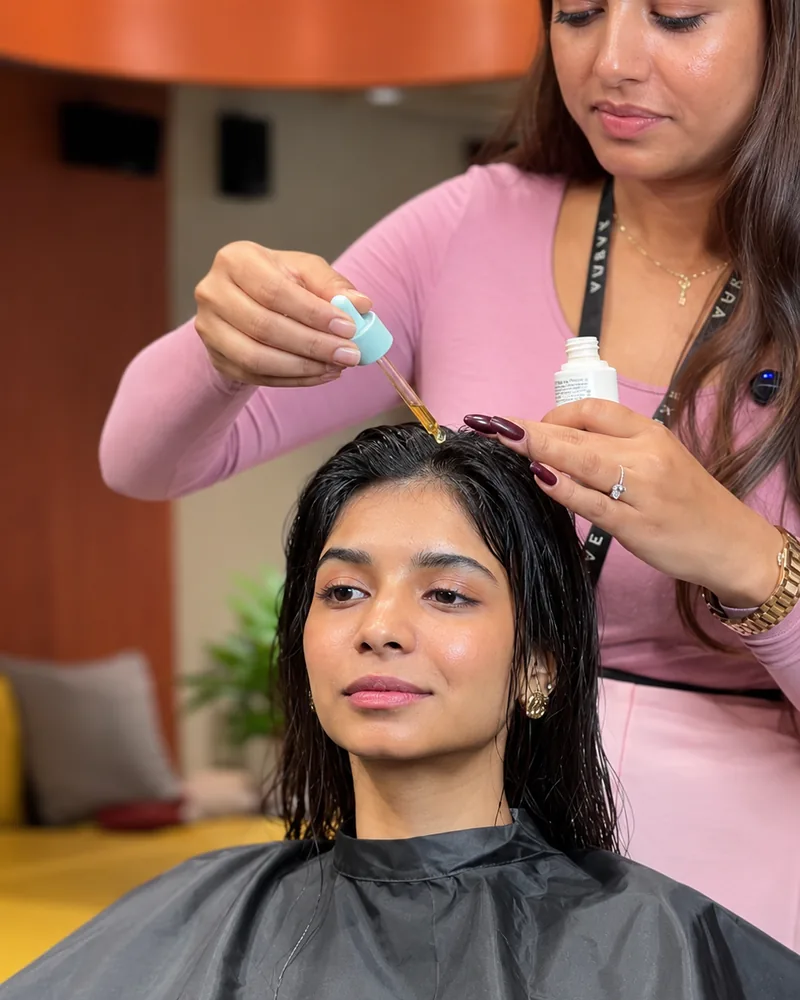
- Scalp Renewal Refresh Treatment: ₹3,100
- Scalp Renewal Restorative Treatment: ₹5,500
A scalp ritual is cosmetic care. If your scalp itches or flakes for weeks, or you notice hair fall, see a dermatologist.
Deep hydration
For: hair that feels dry, rough or dull.
- Nutriplenish Intensive Hydrating Restorative Treatment: ₹3,300. Built on Aveda's Nutriplenish range, it is designed to put moisture and shine back into dry hair.
- Invati Intensive Hydrating Restorative Treatment: ₹6,200. Built on Aveda's Invati range, it is designed for thin hair and nourishes the hair as well. Like every ritual here, it is cosmetic care and does not treat hair loss.
Shine
For: healthy hair that looks flat, or colour that has lost its glow.
- Shine Treatment: ₹3,350. Adds a lasting, glossy shine.
- Shine and Tone Treatment: ₹4,800. Adds shine and enhances your hair's natural tones. Because it tones your hair, it needs a 24-hour patch test first, so book it at least a day ahead.
Curls
For: curly and wavy hair that needs moisture and definition.
- Curl Enhancer and Nourishment Treatment: ₹3,400
Curl Care is available at every Vurve salon; this is the Aveda version, only at Adyar.
Which Aveda ritual suits your hair?
Your stylist checks your hair and scalp before suggesting anything, so treat this as a starting point.
- Dry and frizzy hair: Aveda Botanical Repair, the bond-building treatment. It is what our Adyar stylists recommend most often.
- Coloured, highlighted or lightened hair: bond-building. Add the Colour Treatment straight after your colour service, or book the Restorative if your hair already feels damaged.
- Dull hair that feels dry: Nutriplenish hydrating.
- Oily or heavy scalp: scalp renewal.
- Thin hair that needs body and nourishment: the Invati ritual.
- Healthy hair that lacks shine: Shine, or Shine and Tone if your colour looks flat.
- Curly or wavy hair: Curl Enhancer and Nourishment.
- Short on time: a Refresh, added to your haircut or wash.
Aveda colour at Adyar
Adyar also colours with Aveda. Starting prices from the Adyar menu (November 2026); your final price depends on your hair and is confirmed at the consultation:
- Just My Roots: from ₹3,000 for men and ₹3,600 for women
- Global colour: from ₹4,000 for men and ₹8,000 for women
- Highlites: from ₹7,000 for men and ₹10,000 for women
Every colour service at Vurve starts with a 48-hour patch test to check for skin reactions, so plan your first visit at least two days ahead. You can add the Bond-Building and Strengthening Colour Treatment straight after your colour, in the same visit, to strengthen freshly coloured hair. If you are deciding between highlights, balayage and global colour, our guide to balayage, highlights and global colour can help.
Other Aveda services at Adyar
- Aveda hair wash and conditioning: ₹650 for men, ₹900 for women
- Aveda wash and blow-dry (women): ₹1,700
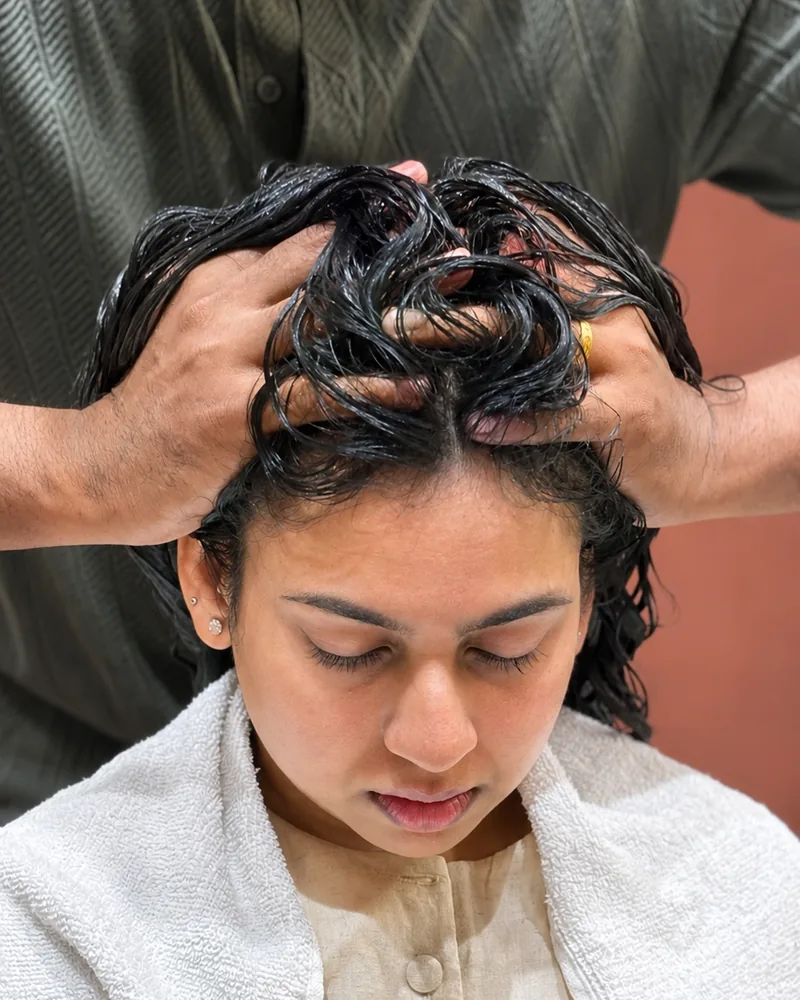
A head massage is also on the Adyar menu if you would like to add one.
Take Aveda home. Vurve Salon Adyar stocks the complete Aveda range, so you can buy the shampoo, conditioner and treatments your stylist used and keep up your ritual between visits.
What clients say
From Google reviews of Vurve Salon Adyar:
"Got my hair spa done... absolutely patient with the spa process. Refreshing experience."
Abhinaya B., Google review, September 2026
"The place is so nice they were full but somehow obliged to give me a hair wash... only Aveda product very nice plant based. Am coming back"
Sha T., Google review, May 2026
"The massage was so intentional, and after a very long time, I felt genuinely relaxed. And my scalp? SO clean. Like, ridiculously clean."
Deepika V., Google review, June 2026
"She took the time to really understand my hair type, concerns, and what I was looking for... it didn't feel rushed; I felt truly listened to"
Pranesh D., Google review, September 2025
Aveda or Kérastase: which should you choose?
Both are professional ranges, and both leave hair in good condition. The choice comes down to where you are and what you prefer.
- Choose Aveda at Adyar if you like plant-based, vegan formulas, or want a longer, spa-style ritual with scalp care.
- Choose Kérastase or 3TenX at any other Vurve salon if one is closer to you, or for a quick Kérastase Fusio Dose, which can be done as late as the day before an event.
You can compare every ritual and price on our hair spa page.
Booking an Aveda ritual at Vurve Salon Adyar
- WhatsApp: message us to book an Aveda ritual at Adyar
- Call the salon: +91 89258 89570
- Hours: open every day, 10:00 AM to 9:00 PM
- Address and directions: Vurve Salon Adyar
- Full price list: Adyar menu
Not sure which ritual to book? Tell us how your hair feels when you message, and the Adyar team will suggest a starting point. You can also book online.
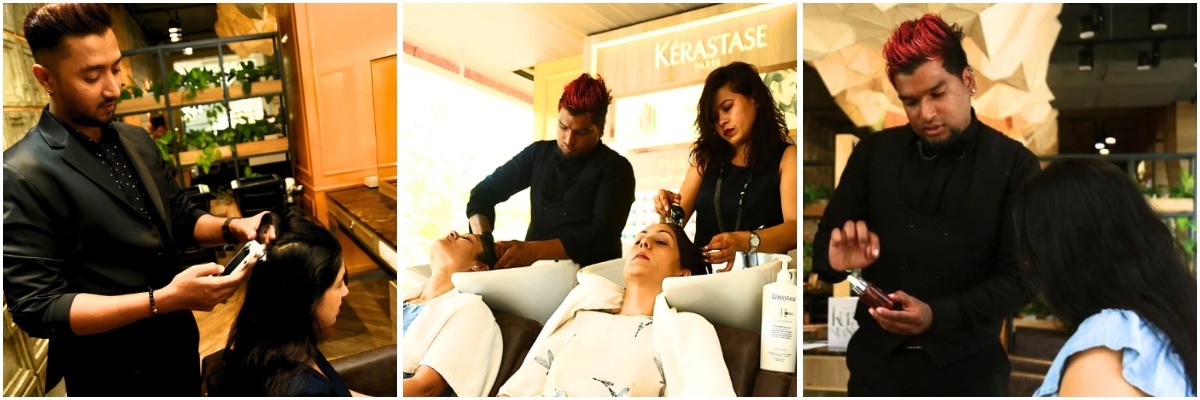
A client once arrived at Vurve for a styling appointment, and the stylist spotted live lice in her hair as she began the service. The team spoke to her privately and kindly paused the appointment and suggested she start lice care first, then return once her scalp was clear.
The decision was based on one priority. Lice can pass to other clients through shared chairs, capes, brushes, and close contact, and every person in the salon that day deserved the same protection. A short pause for one appointment kept everyone else safe, and it reflects the hygiene standard Vurve holds and well-run premium salons share. This guide covers what to do first, what a salon can and cannot offer, and how to return with confidence.
Can You Visit a Salon with Head Lice?
Reschedule any routine haircut, coloring, or styling session until the lice have been treated. Policies differ from one salon to the next. Some will serve you after a conversation, and others will ask you to come back once treatment is done. A call or message before arriving settles the question early and spares everyone an awkward moment in the chair.
A salon service puts a stylist’s hands and tools on the scalp through washing, cutting, blow-drying, and styling. Lice crawl from one head to another and survive away from a scalp for only one to two days, so chairs and floors carry very little risk. Close contact during a service is the real consideration.
What to Do If You Find Lice Before Your Appointment
Confirm it first: Sit under a bright light and comb through small sections with a fine-tooth comb. Look for live, crawling lice and for eggs stuck firmly to the hair shaft, usually behind the ears and along the nape. Dandruff and product residue slide off easily, while nits stay put.
Call your salon: describe the situation plainly, ask about their policy, and reschedule if needed.
Start treatment: Follow the product label or your doctor’s advice. Wet-combing with a lice comb supports any treatment you choose.
Check the people close to you: The AAD advises checking everyone in the household and treating only those who have lice. It also suggests daily checks for 10 to 15 days. AAD: Head lice diagnosis and treatment
Rebook: Pick a date once treatment is complete, and confirm the salon’s requirements when you call.
Can a Salon Remove Lice?
A salon visit is a grooming service, and medical treatment sits outside it. Many people search for “lice and nits treatment in the salon near me," hoping a stylist can clear lice in one sitting. The accurate way to think about it is that treating lice belongs to a pharmacist or doctor, and a salon supports you with hair care before and after.
How Long to Wait Before Returning to a Salon
The wait depends on the product you used. The CDC notes that retreatment is recommended when a medication leaves eggs untouched, and the AAD describes a second treatment around seven to nine days after the first. Timing differs by product, so follow the label or your doctor’s schedule. After treatment, the AAD suggests combing once a day for two weeks to check for lice and nits. Rebook once your combing sessions turn up no live lice, and share that update with the salon.
Lice in India: Children, Thick Hair, and Home Remedies
- Children and school: Lice are most often found in school-age children, and they pass easily through games, shared seats, and sleepovers. Check your child’s school circular for its guidance. Because lice travel between family members, a weekly comb-through at home keeps surprises away.
- Long or thick hair: Dense, waist-length hair hides lice and nits well, so combing section by section under bright light takes patience. Many families find it easier with two people, one parting and one combing.
- Home remedies: Families often try neem paste, coconut oil, vinegar, or tea tree oil. Treat these as unproven, and rely on a label-directed product or a doctor’s advice for actual treatment. Harsh household chemicals such as kerosene can burn the skin and pose a fire risk, so steer clear of them.
- Color and chemical services on an irritated scalp: Scratching can leave tiny sores. Color, bleach, smoothing, and straightening products can sting on broken or inflamed skin, so give the scalp time to settle first. Ask your doctor if the skin still looks red or sore before booking a chemical service.
When to See a Doctor About Head Lice
Book a doctor or dermatologist visit as soon as any of these situations apply. Each one benefits from professional guidance before you try another product at home.
- An infant has lice: Many lice products carry age limits, so a doctor can suggest what suits a baby’s age and skin.
- The person is pregnant or breastfeeding: A doctor can confirm which options are suitable before you pick any product.
- The scalp shows sores, swelling, or signs of infection: heavy scratching can break the skin, and a doctor can treat the irritation alongside the lice.
- Live lice remain after a full course of treatment: The CDC advises considering an alternative medication when crawling lice persist after treatment and retreatment, and a doctor can recommend the right one.
- You feel unsure it is lice: Itchy flakes and red bumps can come from dandruff or an irritated scalp, and a dermatologist can confirm the cause quickly.
What Hygiene to Expect From a Salon
A well-run salon follows steady hygiene routines that lower the chance of lice or any other scalp concern passing between clients. Here is what a thoughtful team typically offers:
- Reusable tools such as combs, brushes, and clips are cleaned and disinfected between clients, as local regulations require
- A fresh towel and cape for every client
- Brushes and combs kept for single-client use until they have been cleaned
- Sanitation and infection-control standards followed throughout the day
- A clear, friendly policy for clients who arrive with active lice, shared when you call ahead
How Vurve Handles a Client with Lice
Most lice show up during the consultation, when the stylist first parts and looks through your hair. If live lice show up at that point, the Vurve team pauses the service and explains the reason with care. Wash, blow-dry, and styling mean close, repeated handling of the hair, and a pause keeps every other client in the salon protected.
The conversation stays warm and private. Our stylist guides you towards a suitable lice-care product, suggests checking with a pharmacist or doctor, and invites you back once your scalp is clear. Many clients feel relieved to hear it framed this way, since a pause carries no judgement and the next visit stays on the calendar. Strict hygiene protocols run through every appointment at Vurve, so each client sits down to clean tools, fresh towels, and a fresh cape.
Final Thoughts
Finding lice before an appointment is manageable. Confirm the infestation, contact your salon, treat according to the label or your doctor, and rebook once combing shows clear hair. Treatment belongs to health professionals, and the salon chair is the place to celebrate your hair once it is ready. Ready for your haircut or coloring session once your scalp is clear? Contact Vurve before you book, and the team will help you pick a comfortable date.
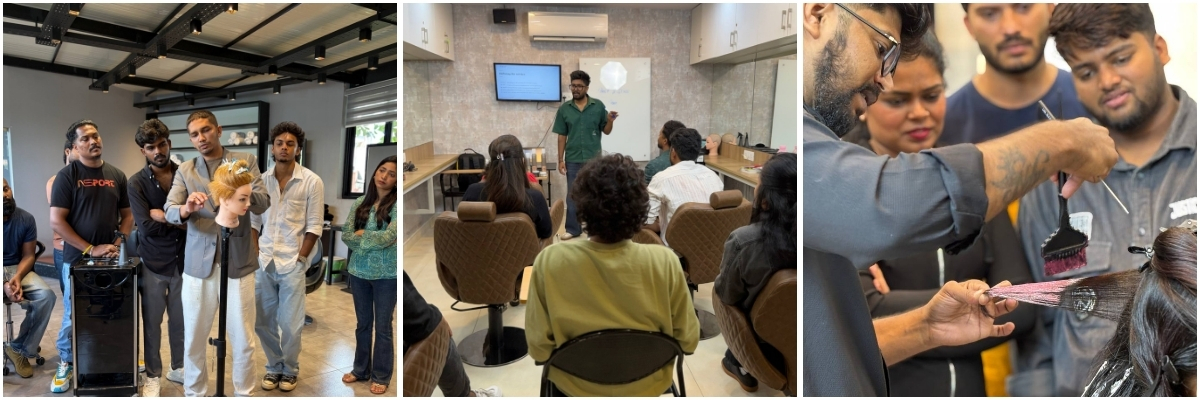
Ask most people what a hairdresser's career looks like, and you'll probably get the same tired image. A neighborhood salon, a pair of scissors, and limited opportunities for growth. That picture is badly out of date. India's beauty and personal care market has crossed $30 billion and continues to grow at more than 10% a year (Source), and hairdressing services sit right in the middle of that spending.
Clients aren't walking in asking for "just a trim" anymore. They're asking for balayage, keratin smoothening, hair Botox, and bridal transformations; they've already researched them on Instagram, and they're willing to pay for it. That shift has quietly turned the hairdressing course in India from an afterthought into one of the fastest, most practical routes into a well-paying, creative career. It also helps that the path doesn't demand years of waiting before it pays off. Most professional routes in India need a multi-year degree before the first real paycheck shows up. Hairdressing usually needs a matter of weeks, which is why it's pulling in such a wide mix of people right now: fresh 12th-grade graduates, homemakers returning to work, and professionals ready for a hands-on career change.
If you're searching for a hairdressing course for beginners with no experience or trying to work out whether a hairdressing career after 12th actually makes sense, this guide covers all of it. The career paths, the training route, the fees and ROI, and the real salary numbers at each stage.
Is Hairdressing a Good Career in India in 2026?
Yes, and the reasons go well beyond "people will always need haircuts."
Client spending on grooming and specialized hair services has risen steadily, with premium salons benefiting the most. While salons once relied on informal on-the-job experience, premium chains now prefer stylists with certification. Certification demonstrates an understanding of hair science, chemical safety, and scalp health, rather than just basic technique.
Rising demand for specialization has driven that shift. Balayage, keratin treatments, hair Botox, and bridal styling aren't niche add-ons anymore. They're core revenue services at any salon that wants to compete for premium clients, and a stylist who can deliver these confidently is worth noticeably more than a generalist.
Social media has raised the bar too. Clients now walk into consultations with reference photos and a working vocabulary of trends they picked up from Instagram and YouTube. That's created an opportunity as much as a pressure, because a stylist who documents their own work well can build a personal following independent of any one salon.
What Jobs Can You Get in Hairdressing?
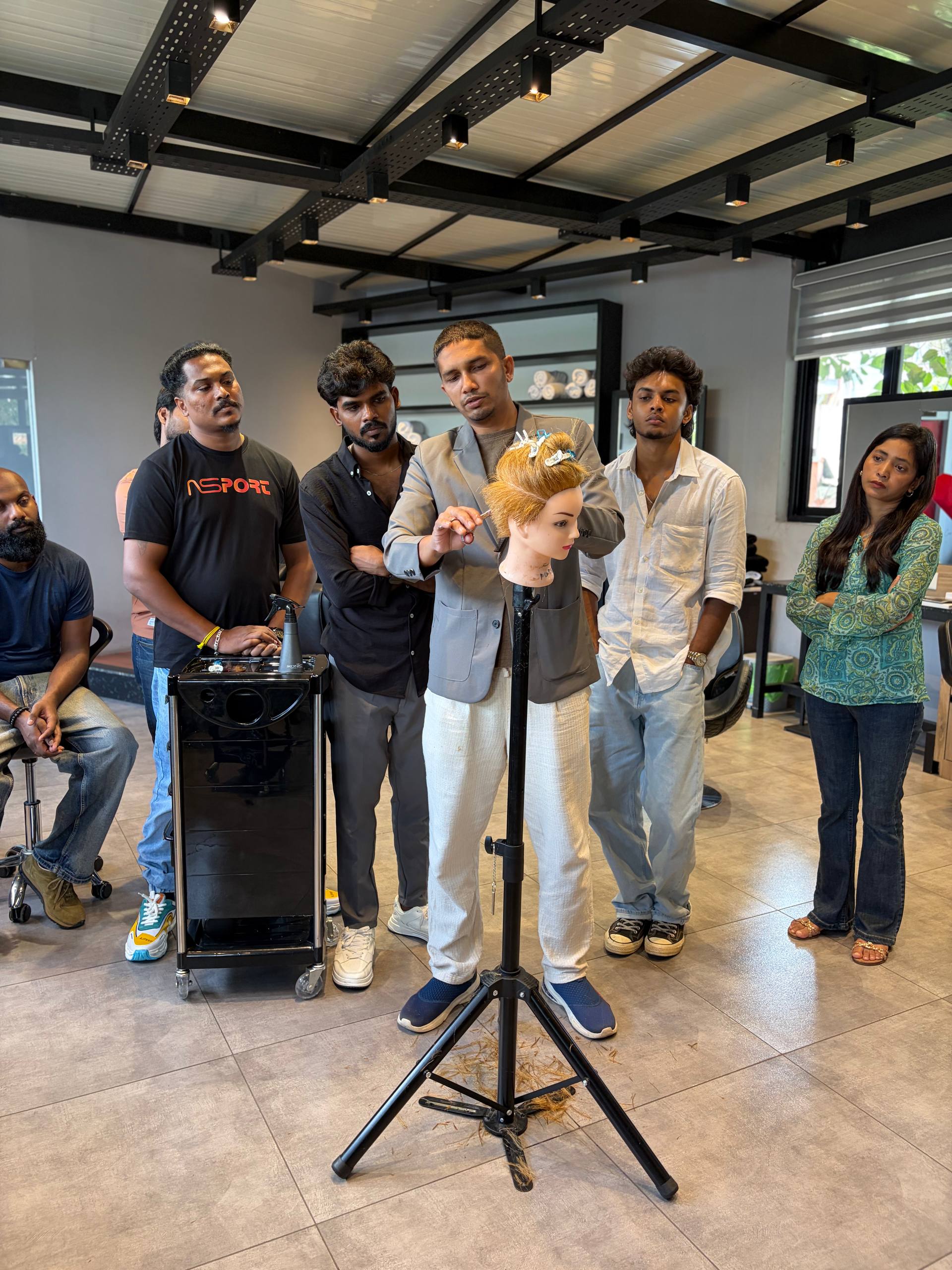
Once you're trained, "salon stylist" is just the entry point, not the ceiling. The same core skills, cutting, colour, texture work, and client consultation, translate across salon floors, film sets, wedding venues, and classrooms.
Traditional and Salon Roles
- Salon Stylist: Cuts, styles, and washes hair for daily walk-ins and a growing base of regular clients.
- Color Specialist: Mixes and applies colour, from natural-looking dimensions to bold transformations. Colour work commands some of the highest service prices in salons.
- Salon Owner: Runs their space, manages a team, and builds a brand around their name.
Creative and Media Jobs
- Editorial Stylist: Styles hair for fashion magazines, photoshoots, and runway shows.
- Film and TV Stylist: Designs looks for actors on movie sets and in television productions.
- Bridal and Event Stylist: One of the fastest-growing niches in India, given the scale of the wedding industry. Specialized updos and bridal hair command premium, per-booking rates.
Corporate and Teaching Paths
- Hair Educator: Teaches new students at a beauty academy, a natural next step for experienced stylists who enjoy mentoring.
- Platform Artist: Demonstrates new techniques on stage for major haircare and product brands.
- Sales Representative: Sells professional haircare products and tools to salons, bridging the technical and business sides of the industry.
How to Become a Professional Hairstylist in India
Wondering how to become a professional hairstylist in India? The path is more structured than most people expect, and it doesn't require a college degree. Start after 12th grade. Most hairdressing academies accept students right after their board exams, and many also welcome career changers and homemakers with zero prior experience. A hairdressing career after 12th is one of the fastest routes to paid, skilled work in the country.
Find a beginner-friendly course. Look specifically for hairdresser courses for beginners, such as those that start from the fundamentals rather than assuming prior skills. Complete a certified diploma. A structured, certified hairdressing training program is what most premium salons now look for when hiring, rather than a scattered mix of tutorials. Get floor experience through an internship. A mandatory salon internship exposes you to real clients, real-time pressure, and real consultations, the things that actually make you salon-ready.
Build a visual portfolio. Document every transformation you work on. A strong portfolio often leads to a job offer, regardless of how many years of experience you list. Taken together, this route usually takes a few months from start to salon-ready, dramatically shorter than most professional training paths in India.
Choose the Right Hairdressing Course and Training Hub
The right hairdressing course builds your foundation before it hands you scissors. It teaches the science of hair and scalp health, insists on live client practice instead of just mannequins, and is backed by an academy with a proven track record of placing its graduates in real jobs. Below is a breakdown of exactly what to look for to ensure your academy delivers on all three.
Understand the Hairdressing Course Syllabus
A strong syllabus starts with the science of hair and scalp health before moving into actual styling. This foundation is crucial because a stylist who knows why a technique works can easily adapt it to different hair types, while someone who only memorizes the steps will struggle the moment a client doesn't look like the textbook example. To build that kind of real-world confidence, make sure your course covers a few core modules.
- Hair science, hair structure, and scalp basics, the foundation everything else builds on
- Shampooing, conditioning, hygiene, and client consultation
- Haircutting fundamentals, layering, and texturising
- Coloring, bleaching, balayage, and chemical treatments, where a lot of the earning potential lives
- Blow-drying, finishing, tool handling, and client care
Compare Beginner and Advanced Programs
Not every stylist needs the same hairdressing course, which is why most reputable academies, Vurve Academy included, run separate tracks.
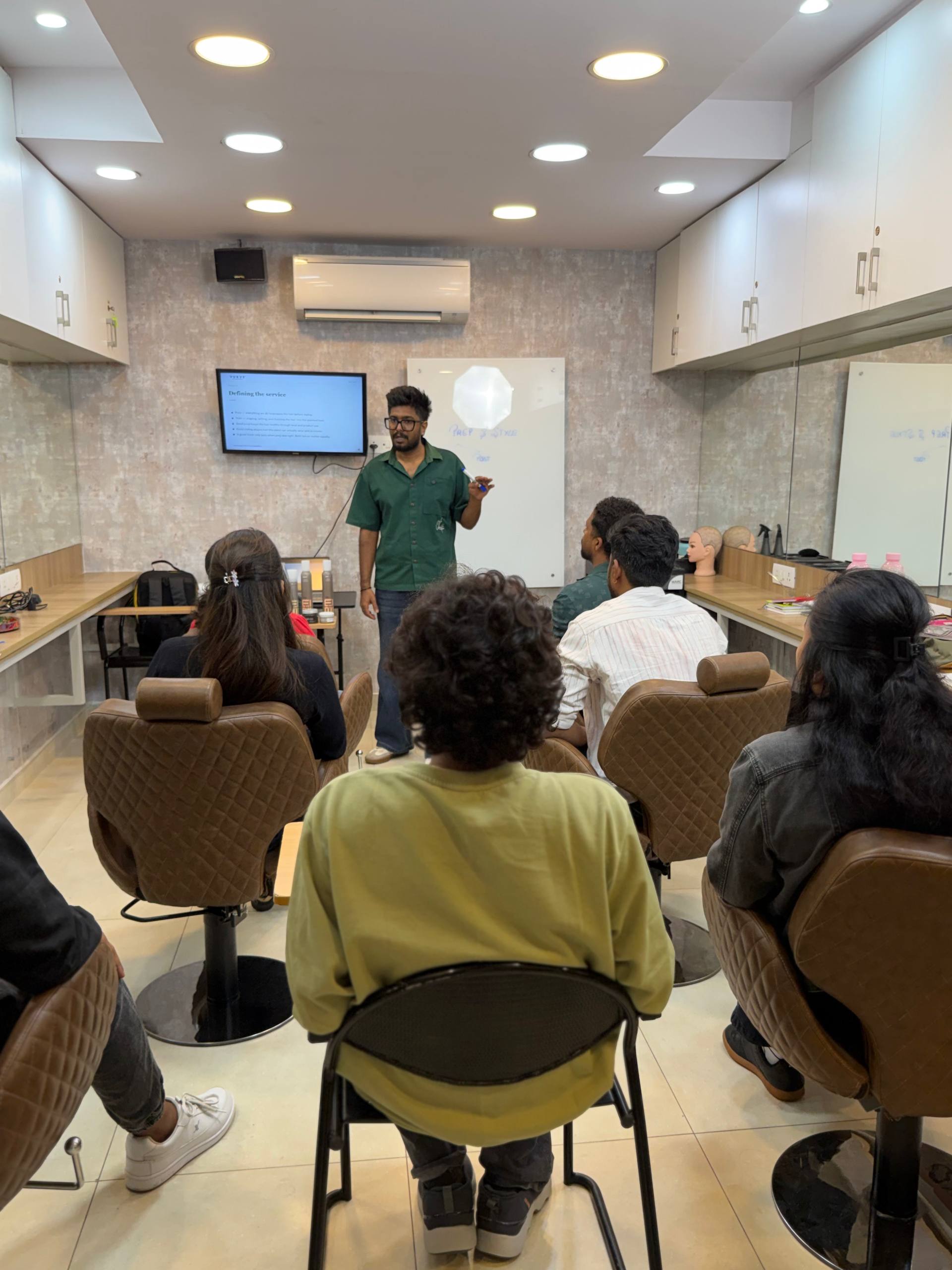
The 8-week Hair Foundation Course is built for people starting from zero. It's designed for beginners with no experience, homemakers considering a career change, students just finishing 12th grade, or anyone exploring their options. It covers the full basics, cutting, coloring, styling, and chemical treatments, so graduates leave salon-ready rather than just introduced to the craft.
For stylists with some experience, an advanced hair color and cutting course fits better. Vurve's version, the Advanced Haircut & Color Course, is a shorter, more intensive four-week program focused on advanced cutting techniques, color correction, and hands-on practice with live models rather than mannequins. For someone who wants a deeper credential from the start, a full diploma in hairdressing in India is usually the better long-term investment, combining both skill levels into one structured, certificate-backed program.
What Should Practical Training Include in a Hairdressing Course?
The single biggest differentiator between a course that produces confident, hireable stylists and one that doesn't is practical exposure. Prioritise live model work over classroom-only learning, demonstrations with guided practice and feedback in the same session, a reasonable student-to-mentor ratio, portfolio creation built into the course itself, and clear specifics on certification and placement assistance rather than a general assurance.
How Much Does a Hairdresser Earn in India?
Career Stage |
Typical Monthly Earnings |
Notes |
Beginner Stylist |
₹15,000 to ₹28,000 |
Approximately ₹23,000 for a beginner stylist at Vurve |
Experienced Stylist |
₹50,000 to ₹1,00,000 |
Grows with specialization (color, chemical treatments, bridal work) |
Top Stylist (5+ years, at Vurve) |
Around ₹55,000 |
Senior technical role with a strong client following |
Salon Director (8+ years, at Vurve) |
Around ₹80,000 |
Combines technical seniority with team and salon management |
Celebrity Stylist |
₹15,000 to ₹30,000 per shoot day |
Typically covers hairstyling, make-up, and touch-ups for the day |
The jump between "beginner" and "experienced" is one of the biggest income jumps in any hands-on trade in India, and it happens over a few years, not decades. The path also splits meaningfully at the top. A top stylist and a salon director earn at different levels because they're doing genuinely different jobs, one deepening technical mastery, the other layering in leadership and management. Freelance and celebrity styling work, usually paid per shoot rather than monthly, can outpace even senior in-salon income once a stylist has built a strong enough reputation.
Why Vurve Academy is the Best Hairdressing Training Hub
Vurve Academy trains students across Bangalore, Chennai, Kochi, and Hyderabad. Across these cities, Vurve has run 35 to 40 batches and graduated more than 500 students, and each location was chosen deliberately, not just for convenience.
Each city gives students something a little different to work with. Bangalore remains one of India's premier hair education destinations because of its young, high-spending professional population and fast-expanding luxury salon market, which means graduates step into a client base that's already trained to pay for expertise. Chennai's advantage is a deeply established bridal and event culture paired with a steady, loyal salon clientele, so students get a consistent, repeat-client experience rather than one-off transactional work.
Kochi brings Vurve Academy's newest infrastructure investment, a purpose-built training space that gives students access to the same international standard of hair education without needing to relocate to a bigger metro. Hyderabad rounds out the picture with a fast-growing, cosmopolitan salon and bridal market of its own, giving graduates exposure to a client base that's expanding more quickly than one that is already saturated.
Across all four cities, Vurve's hairdressing courses stay consistent on the essentials. Hands-on training with international educators and products, small mentorship-focused batches, real client work built into the curriculum, and placement assistance across top salon chains.
Conclusion
Beyond the training itself, there's a compounding advantage to learning in a salon-connected academy rather than a standalone training center. Instructors are working stylists, not just teachers, which means the techniques taught are the ones currently being used with paying clients. Because Vurve Academy sits inside an active, multi-city salon brand, strong students have a genuine pathway into paid work at Vurve Salon locations, rather than a certificate and a cold job search.
If you're ready to turn your passion into an actual career instead of just reading about one, explore Vurve Academy's hairdressing courses and find the batch that fits your city and experience level.
Key Takeaways
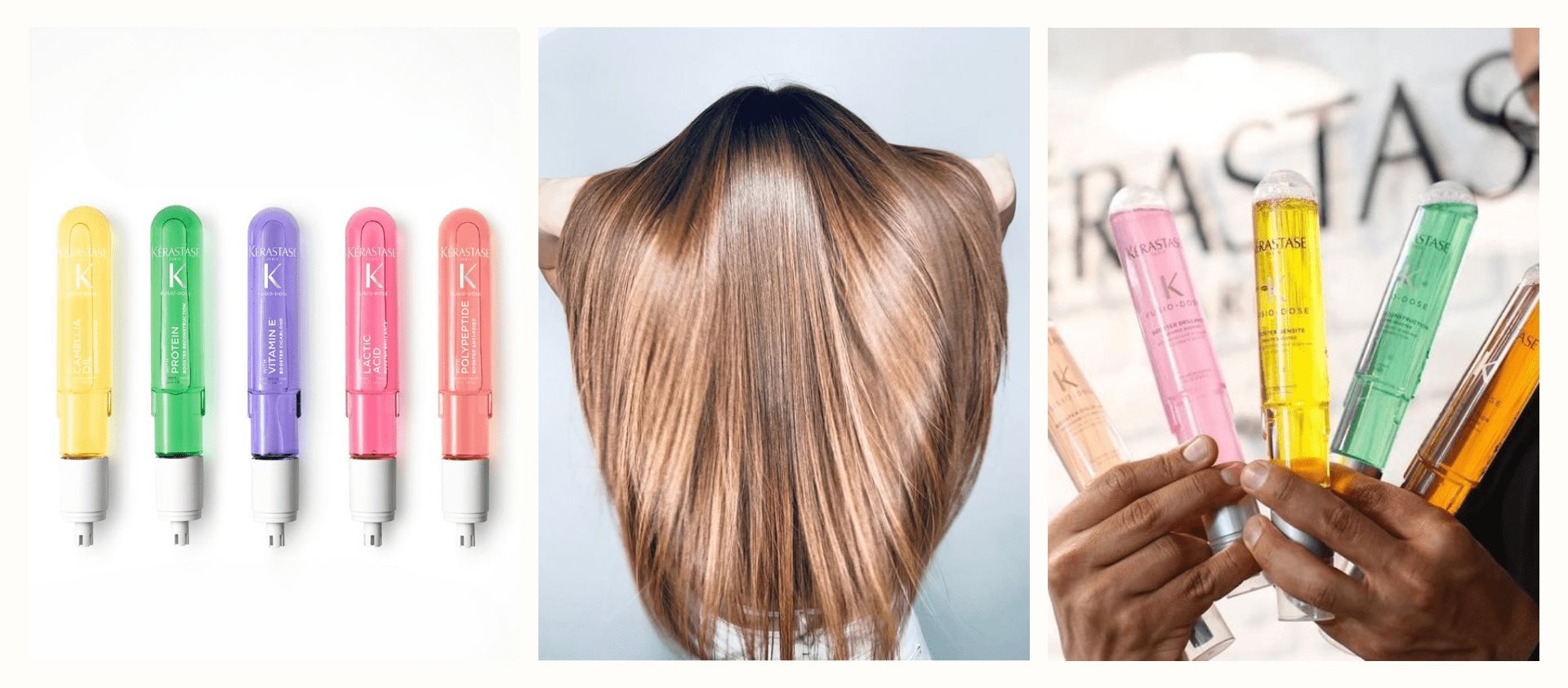
- Fusio Scrub is a kerastase salon service that clears oil, pollution particles, and product build-up from the scalp in one session.
- Scrub Energisant suits oily scalps, and Scrub Apaisant suits sensitive ones.
- Kerastase recommends using the scrub once a week, followed by a treatment on the lengths and ends.
- A Vurve session starts with a scalp consultation and adds an aromatherapy massage with an essential oil of your choice.
Most of us have a skincare routine for the face. The scalp usually gets far less attention, even though it handles sweat, pollution, hair oil, and styling products daily. In Indian cities, the weekend champi and the rushed weekday shampoo both leave something behind. Over time that layer shows up as itch, flakes, or roots that feel greasy by day two. A scalp scrub like the Kerastase Fusio Scrub at Vurve gives that layer a proper reset.
What Is the Kerastase Fusio Scrub Service?
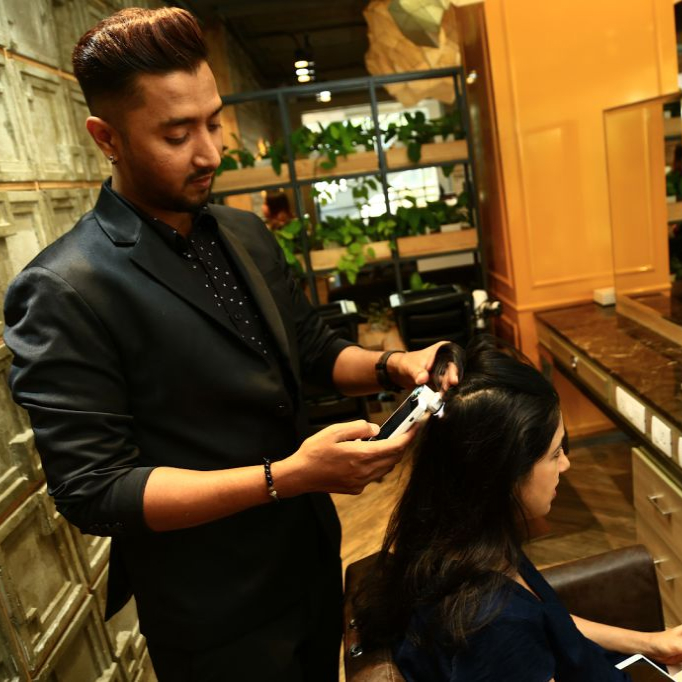
Fusio Scrub is a Kerastase treatment for scalp exfoliation that deeply cleanses the scalp and hair, lifting sebum, pollution particles, and product residue. At Vurve, it arrives as a guided ritual with a scalp massage and essential oils.
Kerastase designed the scrub to replace your regular shampoo for that wash, and it also improves how well the treatments applied afterwards perform. Vurve introduced the service first at its Bangalore salon, where Kerastase Ambassadors walked a group of hair care enthusiasts through it. The formula does the cleansing, while the ritual around it turns a functional wash into something closer to a spa session.
Why Does Your Scalp Need Exfoliation?
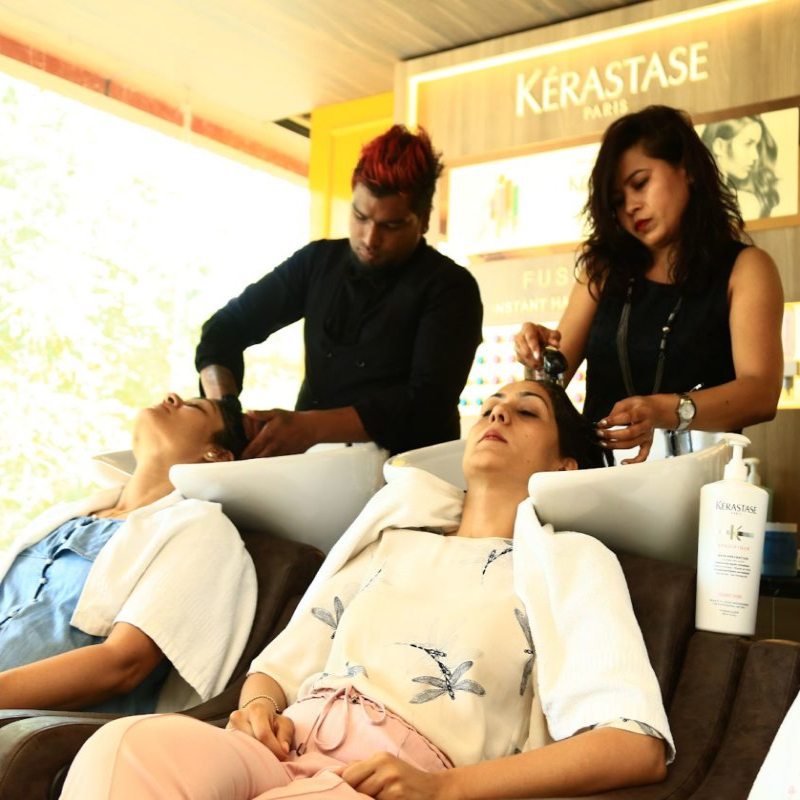
Sweat, sebum, dust, and styling products settle on the scalp every day. Exfoliation lifts that layer, so the scalp stays balanced and your roots feel clean for longer.
An itchy scalp is worth reading as a signal. Sweat, sebum, and pollution left sitting on the skin can trigger the itch, and shampoo that is only partly rinsed out can dry the scalp further. Dandruff has a biological side too. A study published in the Indian Journal of Medical Research on dandruff patients from Chandigarh and Manipal found that the density of Malassezia yeast on the scalp was significantly associated with how severe the dandruff was. A clean, balanced scalp is a good starting point.
Signs your scalp may be ready for a reset:
- Itching that returns soon after a wash
- Roots that turn oily within a day or two
- Visible flakes on dark clothes
- A heavy, coated feel at the roots
- Dull hair even after regular conditioning
Scrub Energisant vs Scrub Apaisant: Which One Suits Your Scalp?
Scrub Energisant is made for oily, dandruff-prone scalps, while Scrub Apaisant is made for sensitive or easily irritated scalps. Your Vurve specialist confirms the match after checking your scalp.
Factor |
Scrub Energisant |
Scrub Apasiant |
| Best For | Oily scalp, excess sebum, dandruff-prone scalp |
Sensitive scalp, dryness, irritation |
| Texture | Purifying scrub with sea salt particles |
Soothing gel |
| Focus | Purifies and refreshes |
Hydrates and calms |
What Happens During a Fusio Scrub Service at Vurve?
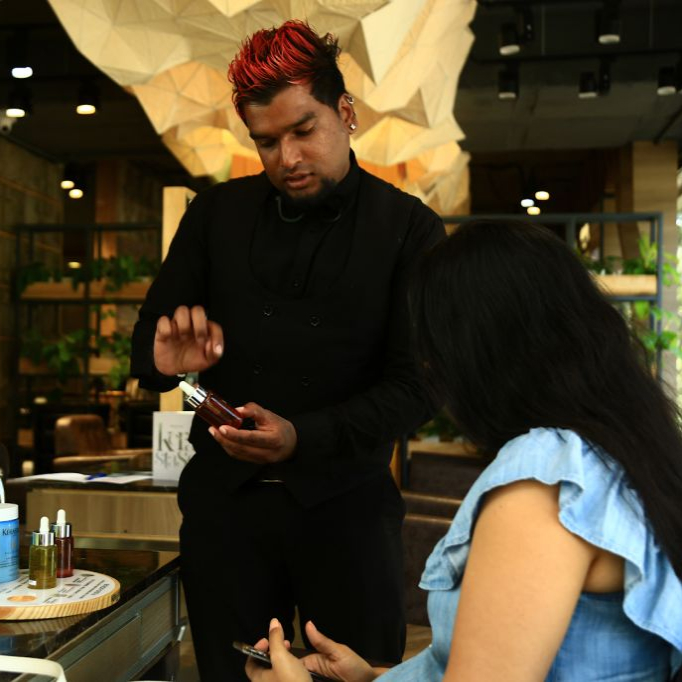
A Fusio Scrub session runs through a scalp consultation, a welcome massage, an aromatherapy massage at the backwash, oil selection, scrub application, and a blow-dry. Each step is handled by a trained Vurve professional.
- Consultation: A hair care specialist examines your scalp and hair and recommends the scrub and oil that fit.
- Welcome massage: The session opens with a relaxing massage, included in the service.
- Aromatherapy massage: You settle in at the backwash for a fragrant scalp massage.
- Oil selection: You smell the essential oils and pick the one you like best.
- Scrub application: The professional applies the scrub, massages it in, and exfoliates the scalp.
- Finish: Your hair is rinsed and dried to perfection
Hair care enthusiast Simrun Chopra, who tried the service at the Bangalore launch, described the consultation this way: “The hair care specialist examined my hair with a 10x zoom machine and noticed oily scalp and dry ends.” She added that her hair stayed nourished a week later.
What Are the Benefits of the Fusio Scrub Service?
The service clears build-up, leaves the scalp feeling fresh, and turns a routine wash into a relaxing session. Hair looks lighter and fuller at the roots.
- Removes pollution particles, sebum, and product residue
- Prepares the scalp so conditioning treatments sit better
- Offers a personalized oil blend chosen by you
- Includes a scalp massage that relaxes the shoulders and neck
- Matches the formula to your scalp type
- Delivered by professionals trained on the Kerastase range
How Often Should You Get a Fusio Scrub?
Kerastase recommends using its Fusio Scrub once a week, always followed by a treatment on the lengths and ends. Our experts can help you adjust the schedule to suit your scalp and routine. Weekly use keeps the exfoliation gentle and consistent. Anyone with open wounds, severe inflammation, or a diagnosed scalp condition should check with a dermatologist before booking.
Fusio Scrub Price at Vurve
Fusio Scrub rituals at Vurve start at Rs. 1,800 for Instant Conditioning and go up to Rs. 5,000 for the Bespoke Hair and Scalp Ritual.
- Instant Conditioning with Fusio Scrub: Rs.1800
- Detox and Deep Cleanse Ritual: Rs.3800
- Bespoke Hair and Scalp Ritual: Rs.5000
How to Book Fusio Scrub at Vurve
Walk into any Vurve Salon, call your nearest salon to reserve a slot with your favorite stylist, or book online. Choose the option that works best for you, and the team will take care of the rest your scalp has been waiting for.
Visiting Vurve Salon Adyar? It is our Aveda salon, so the scalp care there is an Aveda Scalp Renewal treatment rather than Fusio Scrub. Read our guide to Aveda hair rituals at Vurve Salon Adyar to see how it works.
Frequently Asked Questions
1. Is Fusio Scrub safe for sensitive scalps?
Kerastase Fusio Scrub Apaisant is made for sensitive scalps, with a soothing gel texture that cleanses gently. Your Vurve specialist checks your scalp first and picks the formula. A dermatologist visit comes first for open wounds or diagnosed scalp conditions.
2. Can I get a Fusio Scrub if I oil my hair regularly?
Yes. The Kerastase scrub is built to lift oil, sebum, and product residue, so a champi day pairs well with a scrub wash afterwards. Your Vurve specialist can suggest the best formula that fits your scalp type and oiling routine.
3. Should I use a conditioner after Fusio Scrub?
Kerastase recommends following the scrub with a treatment or mask on the lengths and ends. The scrub focuses on the scalp, so a nourishing mask returns softness to the hair. Ask your Vurve stylist to add one to your session.
4. Where can I get the Fusio Scrub at Vurve?
The Fusio Scrub service is offered at Vurve Salons. It launched first at the Bangalore salon. Call your nearest Vurve salon or book online to confirm availability, choose your preferred stylist, and pick a time that suits your schedule.
5. How do I choose between the three Fusio Scrub rituals?
Start with a scalp consultation. Your Vurve specialist reviews your scalp and hair, then matches one of the three Fusio Scrub rituals to your needs, preferred session length, and budget. Share any scalp concerns upfront so the recommendation stays accurate.
6. How is a scalp scrub different from shampoo?
Shampoo cleanses the hair and the surface of the scalp. A scalp scrub adds gentle exfoliating particles to lift residue from the scalp itself. Kerastase designs Fusio Scrub to replace shampoo for that wash, used once a week.
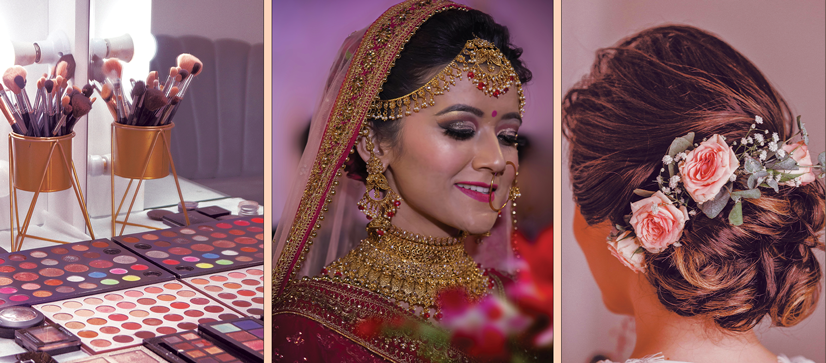
"My wedding is in three months. Should I get keratin? When do I colour? Is it too late for a new cut?"
The short answer: plan your bridal hair care in stages, counting back from your first function rather than the wedding day. Make big changes like colour, a new cut or a smoothing treatment four to eight weeks ahead. Keep the last two weeks for trims, root touch-ups and conditioning, and avoid new chemical treatments in the final week.
We hear some version of this question from brides every wedding season. Below is how the plan works in practice, and how to adjust it for your hair type, your city and the number of functions on your calendar.
Why Timing Matters More Than the Treatment Itself
Almost every hair service looks a little different on day one than it does two weeks later. Colour softens after a few washes. Smoothing treatments can make hair look flatter for the first several days. A fresh cut needs time to settle, and you need time to learn how to style it.
If everything is booked into the last fortnight, you see your hair at its least settled, with no room to correct anything. Spacing services out gives each one a chance to settle and gives your stylist room to fine-tune.
Count back from your first function, not the wedding date. A mehendi, haldi or sangeet a few days before the muhurtham is still a day you will be photographed.
Your Bridal Hair Timeline at a Glance
| When (before first function) | What to do |
|---|---|
| 3 to 6 months | Consultation, hair history, start a conditioning plan |
| 2 to 3 months | Hair trial, big colour changes, new cut |
| 4 to 6 weeks | Smoothing or keratin, if you want it |
| 2 to 3 weeks | Light trim, toner or gloss |
| About 1 week | Root touch-up (after a 48-hour patch test) |
| Final days | Optional Fusio Dose conditioning; no new chemical services |
Three to Six Months Before: Consultation and a Plan
This is the time to sit down with a stylist and talk about the whole wedding, not one service.
Bring:
- The number of functions and their dates
- Photos of the looks you are considering for each one, with the outfit and jewellery if you have them
- An honest history of your hair: past colour, henna, smoothening, rebonding or home treatments
That last point matters more than most brides realise. Henna and some box colours can affect how salon colour and lightening take, so your stylist needs to know before planning anything. If your hair carries a lot of old colour or henna, this is also the time to discuss whether corrective work is needed, because it may take more than one sitting.
If your hair is dry, chemically treated or breaking, start a regular conditioning plan now. In-salon treatments help hair look and feel better over a series of visits, so starting early gives you more to work with by the wedding. They improve how hair looks and handles; they do not permanently reverse damage, and a good stylist will be honest with you about that.
If you notice thinning or sudden hair fall, see a dermatologist rather than relying on salon treatments alone. Stress, diet changes and hormones can all play a part, and a doctor can check for causes a stylist cannot.
Two to Three Months Before: The Trial, Big Colour Changes and Your Cut
Book your hair trial

A trial two to three months out leaves time to change direction if something does not feel right. Use it to test how a style holds through the hours you will actually wear it, not just how it looks in the mirror. Our post on whether bridal hair and makeup trials are worth it covers what to bring and expect.
At Vurve Salon, bridal hair trials are available at selected outlets where our makeup artists are based. Our bridal team will tell you which salon to book when you plan your wedding looks with them.
Bring the real accessories. A heavy gajra, a maang tikka, a matha patti or a dupatta pinned to the hair all change how a style needs to be built underneath. A bun that looks perfect on its own can sag under fresh jasmine by evening.
Make big colour decisions now
If you want a noticeable change, such as balayage, highlights or a move from dark to lighter brown, aim to do it around six to eight weeks before your first function. This gives you:
- Time to see how the colour settles after a few washes
- Room for a toning or correction appointment if needed
- A chance to see the colour in daylight and in photos before the wedding
Not sure which technique suits you? Our guide to balayage, highlights and global colour explains the differences on dark Indian hair.
If you have never coloured your hair, or are trying a new shade or brand, ask whether a skin allergy test is needed. Many colour manufacturers recommend one 48 hours before the service, because some reactions take that long to appear. At Vurve Salon, we carry out a 48-hour patch test before hair colour to check for any skin reaction, so plan for it at least two days before your colour appointment.
Settle on your cut
If you want layers, a fringe or a shorter length, do it at this stage. A new cut needs time to grow in slightly, and you need time to get used to styling it. Many bridal updos and braids also need a certain length or weight to hold, so check with your stylist that the cut you want will still work for the looks you have chosen.
Four to Six Weeks Before: Smoothing and Keratin Treatments
Keratin, smoothening and anti-frizz treatments are popular with brides, especially in humid cities like Chennai and Kochi. If you want one, this window usually works well. The hair has time to settle, the first washes are behind you, and you will know how it behaves before the functions begin.
Discuss these points with your stylist first:
- Updos and curls. Smoothed hair is sleeker and can be more slippery, so some styles may need extra preparation to hold. If your looks rely on volume or long-lasting curls, say so before booking.
- Colour comes first. If you are colouring as well, colour is usually done before or on the same day as a keratin treatment.
- Aftercare. Most smoothing treatments have a setting period after the service and work best with sulfate-free shampoo. Make sure the aftercare does not clash with pre-wedding travel.
- What is in the product. The US FDA notes that some hair smoothing products release formaldehyde when heated. Ask what is being used. At Vurve Salon, we offer formaldehyde-free options, including products from Kérastase and Aveda, so ask your stylist which one suits your hair.
If you have never had a smoothing treatment, do not try one for the first time in the final two weeks. You want to know how your hair responds before the wedding, not during it. Read more in the keratin consultation we have 1,000 times a year.
Two to Three Weeks Before: Trim and Tone
Book a light trim to tidy the ends. This should be a maintenance cut, not a new shape. If your colour has turned brassy or dull, this is also a good time for a toner or gloss to refresh it.
About One Week Before: Roots and Conditioning
If you colour to cover greys or your regrowth shows, a root touch-up about a week before the first function usually gives the freshest result while leaving a few days for the colour to soften. Remember the 48-hour patch test, and book it at least two days before this appointment.
For a final boost, Kérastase Fusio Dose is an instant in-salon conditioning treatment that can be done as late as the day before your main function. It leaves hair soft and nourished with a little extra body, which is why many clients book it before an event.
The Final Days: What to Do and What to Skip
- Do not start any new chemical service, home colour or hair mask you have not used before.
- Do protect your hair from heat. Use a heat protectant if you blow-dry at home.
- Ask your stylist when to wash. Some hair holds a style better when washed the day before, while fine or oily hair often looks better washed on the day. Follow the advice from your trial.
- Plan for several looks. With back-to-back functions, ask which styles can follow one another without a full wash in between.
If Your Hair Is Curly, Fine or Very Thick
Not every bride needs the same plan.
- Curly hair: You do not have to straighten your hair for your wedding. Defined curls, half-up styles and textured buns can look beautiful. Ask for styles that work with your texture, and test them at your trial.
- Fine hair: Updos may need more preparation, padding or extensions for volume. Smoothing treatments can make fine hair look flatter, so discuss this before booking one.
- Very thick hair: Styles may take longer to set, and pins carry more weight. Allow extra time on the day and test the hold during your trial.
A Note for Grooms
Grooms benefit from a plan too, just a shorter one.
- Four to six weeks before: Decide on your haircut and beard shape, so there is time to grow in if needed.
- One to two weeks before: Get the final haircut. Very short styles and fades may need a quick tidy closer to the day.
- A few days before: Beard shaping and grooming.
- If you colour: Book colour about a week before, after a 48-hour patch test.
Questions to Ask Your Stylist
- How many sittings will my colour plan need, and what happens if I want to change it?
- Will a smoothing treatment affect the styles I have chosen?
- What should I avoid at home in the weeks before the wedding?
- Can you plan my looks so one function flows into the next?
- What should I bring to my trial?
Planning Your Bridal Hair With Vurve Salon
At Vurve Salon, our stylists can help you plan colour, texture and styling around your functions, and our makeup team offers bridal and trial makeup. Every bride's hair and calendar are different, so the best place to start is a consultation. Bring your dates, your inspiration photos and your hair history, and we will help you build a timeline that works.
Book a bridal hair consultation or find your nearest Vurve Salon. You can also explore our hair colouring, hair texture treatments and bridal makeup.
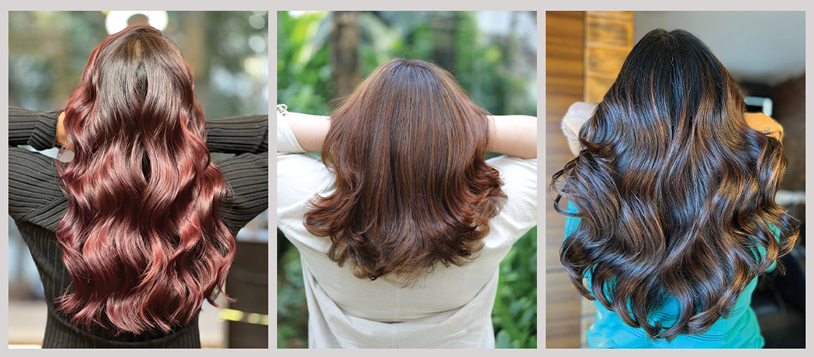
"I want a change, but I don't want to be in the salon every month. Should I get balayage or highlights? Or just colour all of it?"
Balayage vs highlights is one of the most common questions at a colour consultation, and the honest answer depends less on trends and more on three things: how much regrowth you are happy to live with, how light you want to go, and whether you have greys to cover.
The short version
- Choose balayage if you want soft, lived-in brightness that grows out gently and needs fewer visits.
- Choose highlights if you want more even, noticeable brightness from root to end, or want to blend greys.
- Choose global colour if you want one rich, uniform shade all over, or full grey coverage.
The rest of this article explains why, and what each option looks like on naturally dark hair.
What Each Technique Actually Is
Balayage
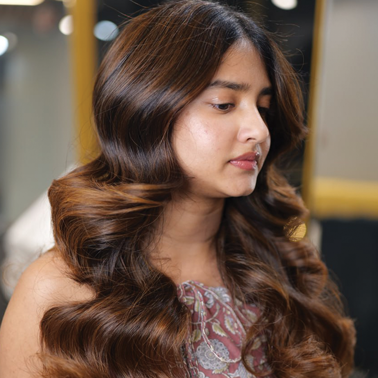
Balayage is a hand-painting technique. Your colourist paints lightener or colour onto sections of hair freehand, usually starting a little away from the root and getting brighter towards the ends. Because there is no hard line at the root, it looks natural as it grows. On the Vurve Salon colour menu, you will see this listed as hair painting.
Highlights
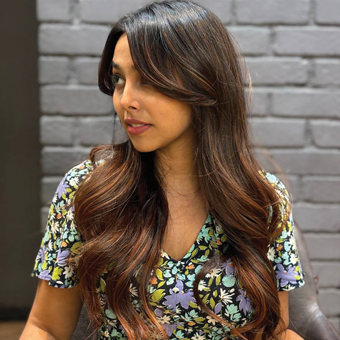
Highlights are fine or chunky strands of hair woven out and lightened inside foils. Foils trap heat and keep the lightener on the chosen strands, so highlights can usually go lighter and look more even than balayage. They can start right at the root. You can have a partial set (often around the parting and face) or a full head.
Global Colour
Global colour means applying one shade all over, root to tip. It can deepen, warm up, cool down or gently lift your natural colour, and it is the most straightforward way to cover greys completely.
Where Ombre Fits In
Ombre is a close cousin of balayage. It moves from darker roots to noticeably lighter ends in a more visible, graduated band. Balayage tends to be softer and more scattered; ombre is a clearer two-tone effect.
Balayage vs Highlights vs Global Colour: Side by Side
| Balayage | Highlights | Global colour | |
|---|---|---|---|
| Look | Soft, sun-touched, darker at the root | Brighter, more even, can start at the root | One uniform shade |
| Regrowth | Grows out gently | Visible line as hair grows | Visible line, especially over greys |
| Typical upkeep | Toner refresh between appointments; repaint every few months | Touch-ups every two to three months for a polished look | Root retouch every four to six weeks if covering greys |
| Grey coverage | Poor; not designed for it | Can blend scattered greys | Best option for full coverage |
| Time in chair | Longer | Long, especially full head | Shortest |
These are general guides. Your hair's growth rate, the contrast you choose and how you care for it all change the numbers.
What Happens When Dark Indian Hair Is Lightened

Most Indian hair is naturally dark brown to black. When dark hair is lightened, it does not go straight from brown to beige. It passes through warm stages of red, copper, orange and gold along the way. These are your natural underlying pigments, and they show up whichever technique you choose.
This is why two things matter so much on dark hair:
- Toner. After lightening, your colourist will usually apply a toner or gloss to neutralise unwanted warmth and set the final shade, whether that is caramel, honey, ash or chocolate. Toner fades over time, which is why lightened hair can start looking brassy after a few weeks.
- Realistic targets. Going from black hair to icy blonde in one sitting is rarely kind to the hair. Lifting several shades takes stronger lightener and more time, and the more you lift, the more care the hair needs afterwards. Warm caramel, honey and soft bronze tones are often easier to achieve and maintain on dark hair than very cool, pale blondes.
A good colourist will tell you what is achievable in one sitting and what may need two or more.
Which One Suits You?
If you want low maintenance
Balayage is usually the better fit. Since the roots stay close to your natural shade, you will not see a sharp regrowth line. Many clients come back for a toner refresh between full appointments to keep the colour from turning brassy.
If you have greys
Balayage is not designed to cover greys. If you have only a few greys scattered through the hair, highlights or fine babylights can help them blend in. If you have more, global colour or a root colour service is usually the more practical route. Some clients combine the two: global colour for coverage, with a few lighter pieces for dimension. Ask about this at your consultation.
If you want a noticeable change
Highlights give a more visible and even brightness, especially if you want lighter pieces near your face and parting. A full head of foils will brighten your overall look more than balayage.
If you want richness without lightening
Global colour can add depth and shine, such as a deep burgundy, a soft brown or a cool espresso, without lifting your hair much. It is often the gentlest choice for hair that is already dry or chemically treated.
If your hair is curly or wavy
Balayage is often placed to follow the shape of each curl, so the colour shows up where the light hits. Ask your colourist whether they colour curly hair dry or wet, and to place colour with your curl pattern in mind rather than on straightened hair.
Before You Book: Things to Tell Your Colourist
- Henna or box colour. Henna and some home colours can affect how lightener and salon colour take, and the result may be uneven or unexpectedly warm. Be honest about your history, even from a year or two ago. Removal may be needed before lightening. Vurve Salon's colour menu includes a box colour and henna removal add-on.
- Smoothing or keratin. If you are planning a smoothing treatment too, discuss the order. Colour is usually done before or on the same day as keratin. Read more in our post on the truth about keratin treatments.
- Allergies or past reactions. Ask whether a skin allergy test is needed. Many colour brands recommend one 48 hours before the service, particularly for new clients or new products.
- Your routine. Daily swimming, a lot of time outdoors, frequent heat styling or a strict workplace dress code all affect which technique suits you.
How to Make Your Colour Last
Colour care matters more for lightened hair than for global colour, but a few habits help both:
- Use colour-safe shampoo and conditioner, and wash a little less often if your scalp allows it.
- Protect from sun. Sun can fade colour and dry out lightened hair, a point the American Academy of Dermatology also makes in its advice on colour-treated hair. A hat or a scarf helps on long days outdoors.
- Use a heat protectant before blow-drying or using irons.
- Book a toner refresh if your balayage or highlights start turning brassy, rather than recolouring the whole head.
- Rinse after swimming. Chlorine and salt water can dry and dull coloured hair.
- Keep up conditioning. Lightened hair is more porous and loses moisture faster, so regular conditioning helps it look and feel healthier. In-salon options such as Kérastase Fusio Dose can be added to a colour visit.
Questions to Ask at Your Consultation
- How light can I go in one sitting, and what will it take to get to my goal?
- Will I need toner, and how often should I refresh it?
- What will my regrowth look like in two months?
- How will this work with my greys, henna history or past treatments?
- Which products should I use at home?
Planning Your Colour at Vurve Salon
Balayage, highlights and global colour each suit different hair, lifestyles and goals. The best results start with a proper conversation about your hair history and how much maintenance you want. At Vurve Salon, our colourists can look at your hair in person and suggest the option, shade and placement that will work for you, now and as it grows out.
Explore our hair colouring services, then book a colour consultation or find your nearest Vurve Salon. You can also see every hair colour price before you book.
Kerastase Fusio Dose is a custom-blended, in-salon hair treatment that handles two hair concerns in one application. Your stylist picks one concentre and one booster after a diagnosis, and the mix goes on after your wash in under five minutes. You’ve tried the masks, the serums, and the weekend oiling, and your hair still won’t cooperate. A quick salon step can change that. The effect is difficult to describe. You notice it over the coming weeks, when your hair falls smoothly over your shoulders and bounces a little as you walk.
Key takeaways
- Fusio Dose is a Kerastase salon service and cannot be done at home.
- It combines 1 concentrate and 1 booster, with up to 30 possible combinations.
- The application takes under 5 minutes.
- Results last up to 5 washes, depending on your hair’s condition.
1. How Does Kerastase Fusio Dose Work?

Kerastase Fusio Dose blends one concentrate and one booster into a custom liquid mix, chosen after a hair diagnosis, so two concerns are treated in a single application. The idea is simple. Instead of one product for everyone, the treatment creates a formula for your hair alone. Here’s what goes into it:
- 6 concentres
- 5 boosters
- Up to 30 different combinations
2. What Is the Difference Between a Concentrator and a Booster?
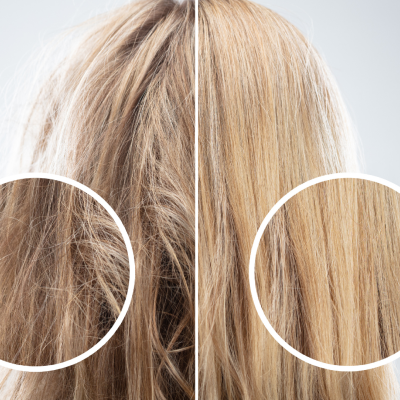
The concentre addresses your primary hair concern. The booster treats your secondary one.
- Concentre: a highly concentrated vial that covers several needs at once.
- Booster: packed with active ingredients that work on the hair’s inner fiber structure, giving nourishment you can feel right away and that keeps going after you leave.
Kerastase says its molecules are up to 100 times smaller than those in a traditional haircare product, which is why this behaves differently from a regular mask. (Source)
3. What Happens During a Fusio Dose Treatment at the Salon?
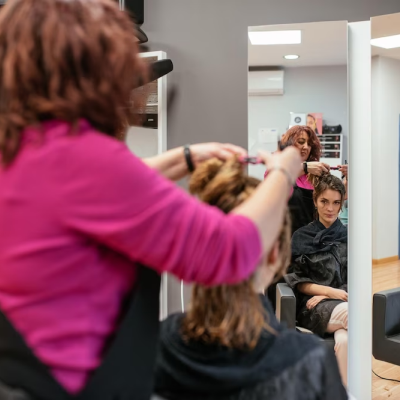
A Fusio Dose visit has two steps: a diagnosis, then a quick application after a gentle wash.
Diagnosis: Good results start with a proper diagnosis.
Your stylist will:
- Ask about your concerns, lifestyle, and hair care habits
- Check your scalp closely.
- Explain what they found and choose the concentre and booster that suit you best
Application: This is the easy part.
- You get a gentle hair wash.
- The Fusio Dose mix is sprayed onto your hair.
- It takes under 5 minutes, and you can see the difference immediately.
4. How Long Does Kerastase Fusio Dose Last?
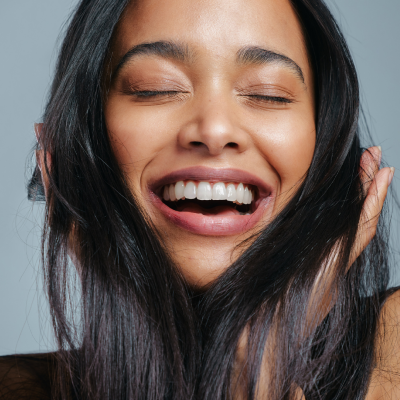
Fusio Dose results last up to five washes, depending on your hair’s condition. That figure comes from Kerastase. Aftercare still matters. Ask your stylist which Kerastase home-care products pair with your mix, and use them as advised so the finish holds as long as possible.
5. Can You Do Kerastase Fusio Dose at Home?
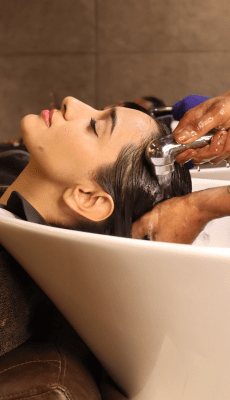
No. Fusio Dose is a Kerastase-exclusive salon service and cannot be done at home. The formula depends on a professional evaluation of your hair, and the wrong pairing wastes the treatment. Your hair deserves a few careful minutes, and Vurve Salon is the perfect place to spend them. Leave the blending to us and relax.
Who Should Get a Fusio Dose Treatment?
Fusio Dose suits anyone whose hair feels dull, dry, frizzy, or color-tired. Kerastase positions it for all hair types.Stylists commonly recommend it for:
- dryness and breakage
- frizz
- color damage
- dullness
- brassiness in blonde hair
Your diagnosis decides the exact mix, so book a consultation rather than guessing which concentre you need.
Fusio Dose vs Hair Mask: What Is the Difference?
A mask is a general product that you apply yourself. Fusio Dose is a diagnosed, custom-blended salon service.
|
|
|
|
|
|
|
|
|
|
|
|
|
|
|
|
|
|
|
|
Kerastase Fusio Dose is worth a visit if your hair needs a quick, targeted fix without a long salon sitting. One concentrate and one booster, chosen after a proper diagnosis, address two concerns at once. The application takes under five minutes, and the results last up to five washes. It isn’t a replacement for your regular hair care. It’s a sharp boost on top of it, and it works best when your stylist matches the formula to your hair rather than the other way around.
Book Your Kerastase Fusio Dose at Vurve Salon
Not sure which concentre and booster suits your hair? Our stylists will assess your hair concerns and create a personalized mix for you while you relax in the chair. Book an appointment at your nearest Vurve salon and ask for a Kerastase Fusio Dose consultation.
Visiting Vurve Salon Adyar? It is our Aveda salon, so its menu has Aveda hair rituals instead of Kérastase. The closest match to a Fusio Dose there is an Aveda Refresh treatment. Read our guide to Aveda hair rituals at Vurve Salon Adyar to see what each one does.
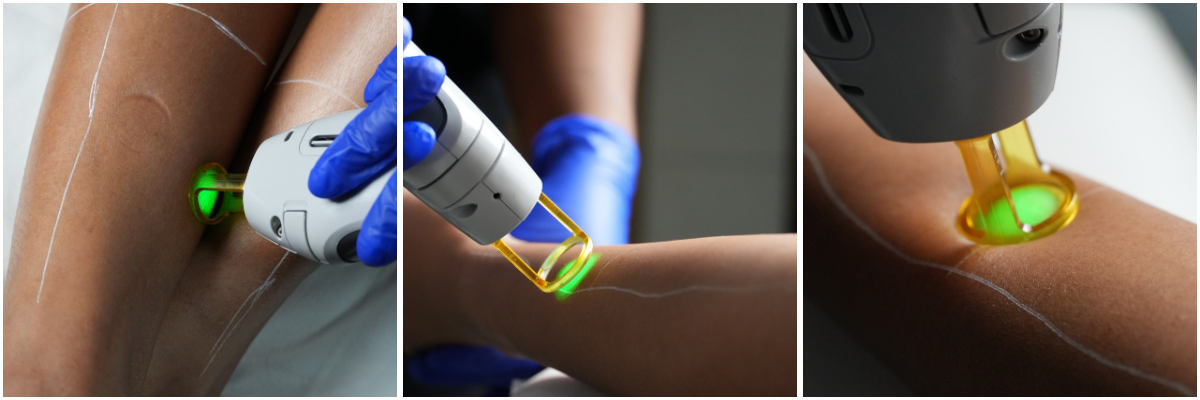
Key Highlights:
- This guide breaks down why getting laser hair reduction during the summer is completely safe, debunking old myths with advanced laser technology.
- Get to know the essential rules for summer treatments, including the easiest body areas to target right now and strict sun protection.
- Discover why Vurve Aesthetics, Chennai, is the premier choice for LHR, utilizing advanced Candela GentleYAG Pro technology perfectly customized for Indian skin tones.
Is it okay to start laser hair treatment in the summer?
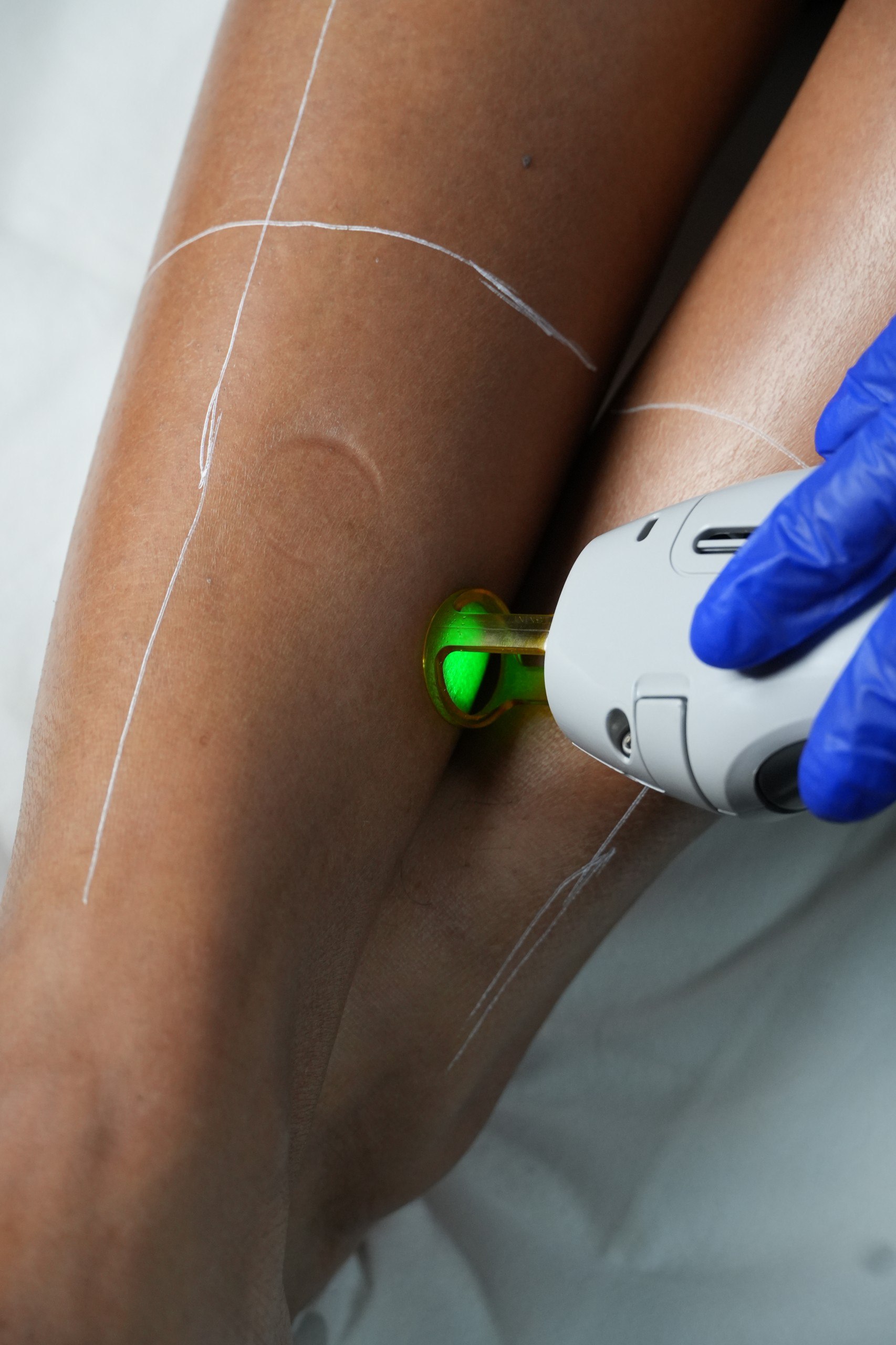
If you have typed that into Google at least once this month, you are not alone. Every year, as the days grow longer and the wardrobes get lighter, this query becomes the most asked question we receive at Vurve Aesthetics. Whether you are navigating the intense heat of the Indian summer or prepping for a sunny July Fourth weekend across the globe, the hesitation is entirely understandable.
There is a long-standing rumor that getting lasers in the summer is a bad idea. The common fear is that summer brings more sun exposure and tanned skin, which might cause the laser to accidentally burn the skin or create dark spots instead of just targeting the hair. This worry leads many people to stop their treatments right when they want smooth, carefree skin the most. But is that hesitation actually grounded in modern science? This blog aims to clarify common misconceptions and provide a thorough, transparent guide to summer laser hair removal.
Is Summer Actually a Bad Time for Laser Hair Reduction?
No, summer is not actually a bad time for laser hair removal (or laser hair reduction). The idea that you must wait for winter is a common myth. With proper precautions, the treatment is safe and effective year-round, including during the peak summer months. In fact, areas that are naturally covered by your daily clothing, such as your underarms, legs under trousers, and the bikini line, are perfectly safe and highly recommended to treat year-round.
What Is Laser Hair Reduction, and How Does It Differ from Waxing and Shaving?
Laser hair reduction is a medical-cosmetic procedure that uses highly concentrated, targeted beams of light to safely penetrate the skin and permanently disable hair follicles at their root.
How It Works: The laser emits light that is absorbed by the pigment (melanin) in the hair follicle. This absorbed light generates heat that damages the follicle, temporarily or permanently halting hair production. The process is based on selective photothermolysis, which means the laser selectively targets the hair follicle without destroying the surrounding skin. To understand why so many clients are stepping away from traditional methods, review this clinical breakdown:
|
|
|
|
|
|
|
|
|
|
|
|
|
|
|
|
|
|
|
|
|
|
|
|
|
|
|
|
|
|
Which Body Areas Are Actually Safe to Treat Right Now in the Summer?
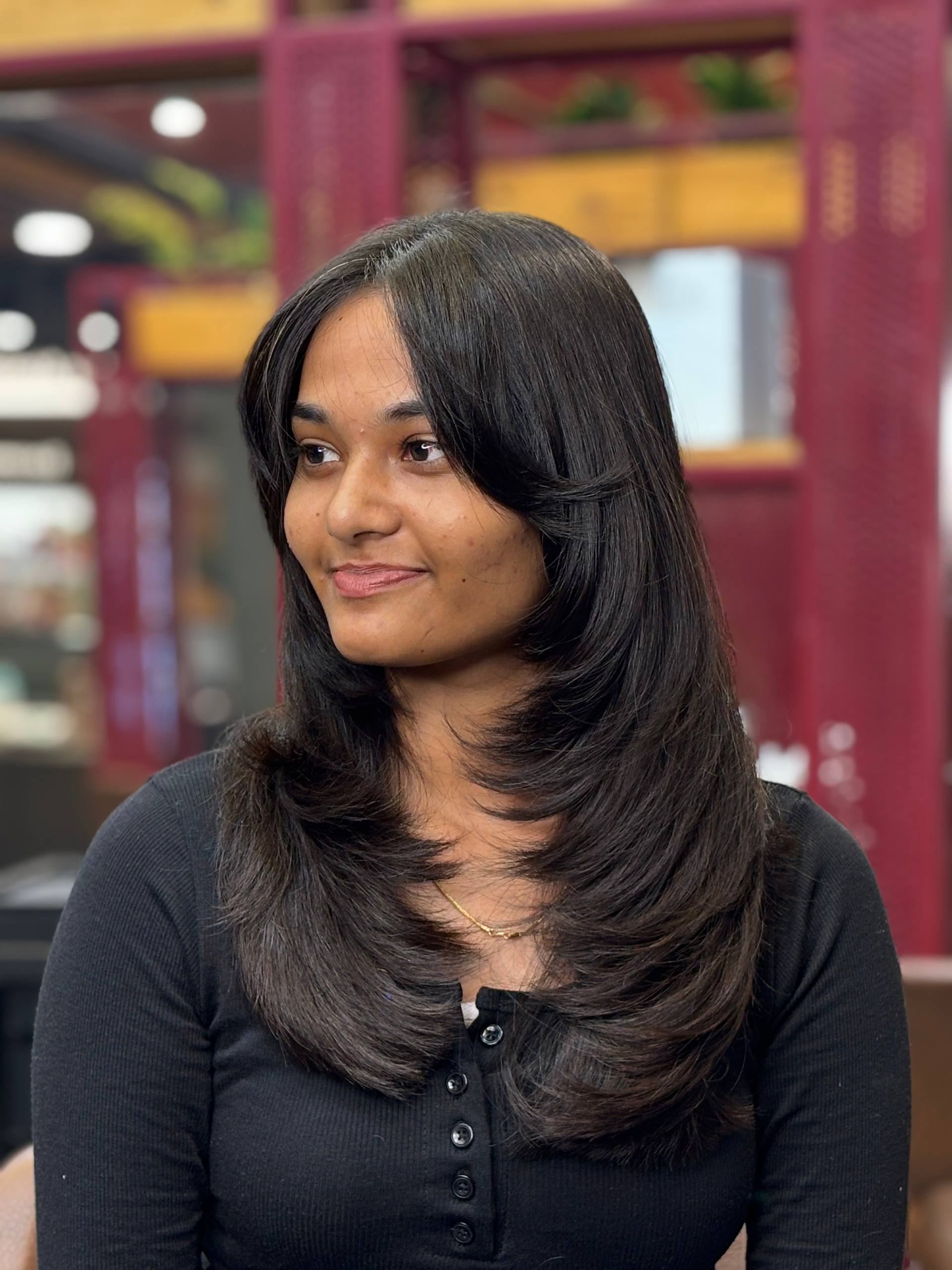
In the summer, you can safely treat almost any body area with laser hair reduction as long as the skin is not actively tanned or sunburned. However, the most safe areas are those easily hidden from the sun, like
- Underarms: Highly protected from direct sunlight, making them safe year-round.
- Bikini Line & Brazilian: Rarely exposed to the sun, making these areas generally safe even during peak summer.
- Legs, Arms, Chest, & Back: You can treat these, but it requires strict avoidance of direct sunlight. You must wait at least 2 weeks after any sun exposure before treatment and avoid the sun for 2 to 4 weeks afterward.
- Face & Neck: These are the most sun-exposed areas on your body. You must strictly apply an SPF 50+ sunscreen every day and carry a UV-protective umbrella when stepping outside to completely shield your skin and prevent dark spots.
How Long Should I Stay Out of the Sun Before a Laser Hair Reduction Session?
For maximum hair reduction results and absolute skin safety, strict adherence to pre-treatment timelines is non-negotiable.
Golden Pre-Treatment Timeline. To maintain best clinical practice, you should avoid direct sunlight on the area to be treated for 2 to 4 weeks prior to your appointment. This means no sunbathing, no long periods of outdoor sport without protection, and no beach holidays in the immediate run-up to your session. By avoiding the sun, your skin will be at its stable baseline tone with no active melanin production from tanning, so the laser can focus purely on the hair root without interference.
Managing Random Sun Exposure: If you accidentally get a sunburn or a deep tan on your targeted body parts before an appointment, do not attempt to hide it. They will simply assess the area and reschedule your session by a week or two to allow the skin matrix to calm down completely. Treating actively tanned or burned skin can result in blistering; waiting is always the safer, smarter option.
Recommended Sunblock Application: During your laser hair reduction journey, high-SPF, broad-spectrum sunscreen is your absolute shield. You must apply a generous layer of sunblock to any exposed body part undergoing laser sessions, repeating the application every 2 to 3 hours if you are outdoors. For humid climates like Chennai, look for matte-finish or gel-based sunscreens with SPF 50+ that won't block your pores when you sweat.
Is laser hair reduction painful?
Laser hair removal is generally well-tolerated and much less painful than waxing or threading. Most people describe the sensation as a quick, warm pinprick or a light snap of a rubber band against the skin. The discomfort is generally manageable, and most people return to everyday activities immediately afterward with no real downtime.
How many sessions does laser hair reduction typically require?
Most people need 6 to 8 sessions of laser hair reduction, spaced 4 to 6 weeks apart, to achieve 80–90% permanent reduction. However, the exact number depends on your body area, hair thickness, and hormonal factors.
- Face (upper lip, chin): 6–8 sessions,
- Underarms: 6–8 sessions
- Arms: 6–8 sessions
- Legs: 6–8 sessions
- Bikini line: 6–8 sessions
- Back/Chest: 8–10 sessions
Why multiple sessions are needed:
- Hair grows in cycles, and laser only targets hair in the active growth phase.
- Not all hair is in the same growth stage at any given time.
- Each session makes hair finer, patchier, and slower to return.
Important factors that affect session count:
- Hair thickness/density: Coarser hair needs fewer sessions; finer hair may persist because it's harder for the laser to target thin strands effectively.
- Hormonal conditions: PCOS or hormonal imbalances require additional sessions because they continuously stimulate new hair growth.
- Age: Older individuals need more sessions because slower hair growth cycles and hormonal changes make hair less responsive to laser treatment during each session.
- Skin type & hair color: Darker skin and lighter hair affect laser effectiveness because the laser needs contrast between skin and hair pigment to work properly.
You can expect a visible 10% to 25% reduction in hair density after every single visit. The hair that does grow back will be noticeably finer and softer.
Is Laser Hair Reduction Safe for Indian Hair and Darker Skin Tones?
Yes, laser hair reduction is completely safe for Indian hair and darker skin tones when done with the right technology and expertise. The advanced method called Nd:YAG safely bypasses the skin's surface pigment, ensuring complete safety for deeper complexions. This makes it highly effective for Indian skin tones ranging from wheatish to dusky, but it is important to choose a reputable clinic with trained professionals.
Customized Treatment Plans and Heat Protection
There is no one-size-fits-all in luxury aesthetics. Expert technicians evaluate your specific skin tone according to the Fitzpatrick scale and customize the machine's energy settings and pulse durations. Combined with built-in cryogen cooling mechanisms that protect your skin's surface from excess heat, Nd:YAG technology ensures a safe, burn-free, and beautifully smooth outcome for deeper skin tones.
What to Avoid After Your Laser Hair Reduction Session in Summer
Post-care is just as important as the treatment itself. When you step out of your session, your hair follicles will remain slightly sensitive to heat for a short window. To ensure your skin heals perfectly, follow these crucial post-care steps for the first 24 to 48 hours:
- Skip the Gym and Heavy Sweating: Avoid heavy workouts, hot yoga, or intense cardio for at least 24 to 48 hours. Excessive sweat can trap bacteria and irritate freshly treated, open follicles.
- Avoid Artificial Heat: Say no to hot showers, steam rooms, saunas, and hot tubs until any mild redness fully settles. Opt for lukewarm or cool showers instead.
- Keep Skincare Simple: Do not apply harsh chemical exfoliants, retinols, or heavily fragranced lotions to the treated area for at least 3 to 5 days. Stick to soothing moisturizers like pure aloe vera gel.
- Defend Against the Sun: Keep the treated area completely away from direct sunlight and apply broad-spectrum SPF to prevent hyperpigmentation.
- No waxing or plucking: Do not pull hair from the root between sessions. Shaving is the only approved hair removal method.
- Avoid Exfoliation: Do not use loofahs, body scrubs, or chemical peels for at least 3 to 5 days after your session.
Questions You Should Ask Your Clinic Before Booking
1. What specific laser technology does the clinic use? You want to ensure they possess an Nd:YAG or an advanced, skin-typed diode laser suitable for your specific skin tone.
2. Is the practitioner certified? Ensure the technician performing the procedure is a trained aesthetician or a licensed dermatologist.
3. Is a patch test offered before the first full session? A patch test is a non-negotiable safety hallmark of a professional clinical environment.
4. What is the protocol if you have recently tanned or spent time outdoors? A reputable clinic will always prioritize skin safety over forcing an appointment.
5. How many sessions do you estimate for my case? Most people need 6 to 10 sessions, but if you have hormonal issues (like PCOS), it might take longer.
6. Is laser hair removal permanent? Clarify expectations; lasers offer long-term hair reduction, not 100% permanent removal, and you may need annual touch-ups.
7. What are the real risks for my skin type? Ask about risks of post-inflammatory hyperpigmentation (PIH) or blistering.
8. What are the pre- and post-care rules? You need to avoid sun exposure, waxing, plucking, and retinols. Ask for a list of things to do before and after your sessions.
The Best Laser Hair Reduction in Chennai: Vurve Aesthetics' Approach
At Vurve Aesthetics, we drive your safety and results with deep clinical expertise. We treat your aesthetic journey as a personal experience tailored entirely to you.
- The Initial Consultation: Your journey begins with a private consultation with our skin experts. We assess your hair type, desired treatment areas, skin tone, and your recent sun exposure history. We also review your medical history to ensure you are a perfect candidate for a safe, successful outcome.
- The Candela GentleYAG Pro Advantage: This is where we completely separate ourselves from standard, everyday salon treatments. At Vurve Aesthetics, we invest exclusively in the absolute pinnacle of medical aesthetic technology: the Candela GentleYAG Pro. This elite system is an absolute game-changer for your skin, offering revolutionary advantages:
- The Global Gold Standard: It is internationally recognized as the safest, most highly effective, and most powerful laser technology specifically designed for melanin-rich Indian skin tones.
- Ultimate, Zero-Compromise Comfort: It features a patent-safe, built-in Dynamic Cooling Device (DCD) that instantly cools your skin with a soothing blast of cryogen milliseconds before every single laser pulse. This allows us to deliver maximum hair-destroying power with virtually zero discomfort.
- Unmatched Speed and Permanent Precision: The GentleYAG Pro delivers a flawlessly smooth, reliable, and permanent reduction in a fraction of the time compared to standard salon alternatives. You get superior results faster.
Embrace a Relaxing Summer with Vurve Aesthetics
You no longer have to wait for the winter chill to start feeling beautiful and confident in your skin. As we have explored, beginning your journey with laser hair reduction during the summer is not only completely safe but incredibly rewarding, provided you follow expert pre-care guidelines, stay mindful of direct sun exposure, and partner with a trusted clinical team. Ready to improve your beauty routine? Book your personalized consultation at Vurve Aesthetics today and let us plan your customized path to lasting smoothness and effortless confidence.